Table of Contents - Channel strip plugins (expand)
Introduction
Channel strip plug-ins, which replicate the structure of existing hardware consoles (analog and analog-digital) or are inspired by console channels, are often the tool of choice for sound engineers – both those who have previously worked on real analog mixing consoles and those who work exclusively in the digital domain but are still curious about the nature of traditional studio workflow.
The basic types of channel strip plug-ins are:
1. Faithfully reproduced channels of specific analog consoles, equipped with all sections found in the original device.
2. Stripped-down versions – most often by omitting the noise gate or the entire dynamics section, but with replicated equalizer, preamp, and possibly fader sections.
3. Plugins that are variations or extensions of the above, OR completely new creations with the channel structure of a typical mixing console.
Since this article concerns the processing power requirements of audio plugins, I am not focusing on which group a given plugin belongs to, but rather on providing info about the CPU power demands of the plugins I have at my disposal at the time of writing (or updating) this text.
Channel strip plugins – analog consoles emulations
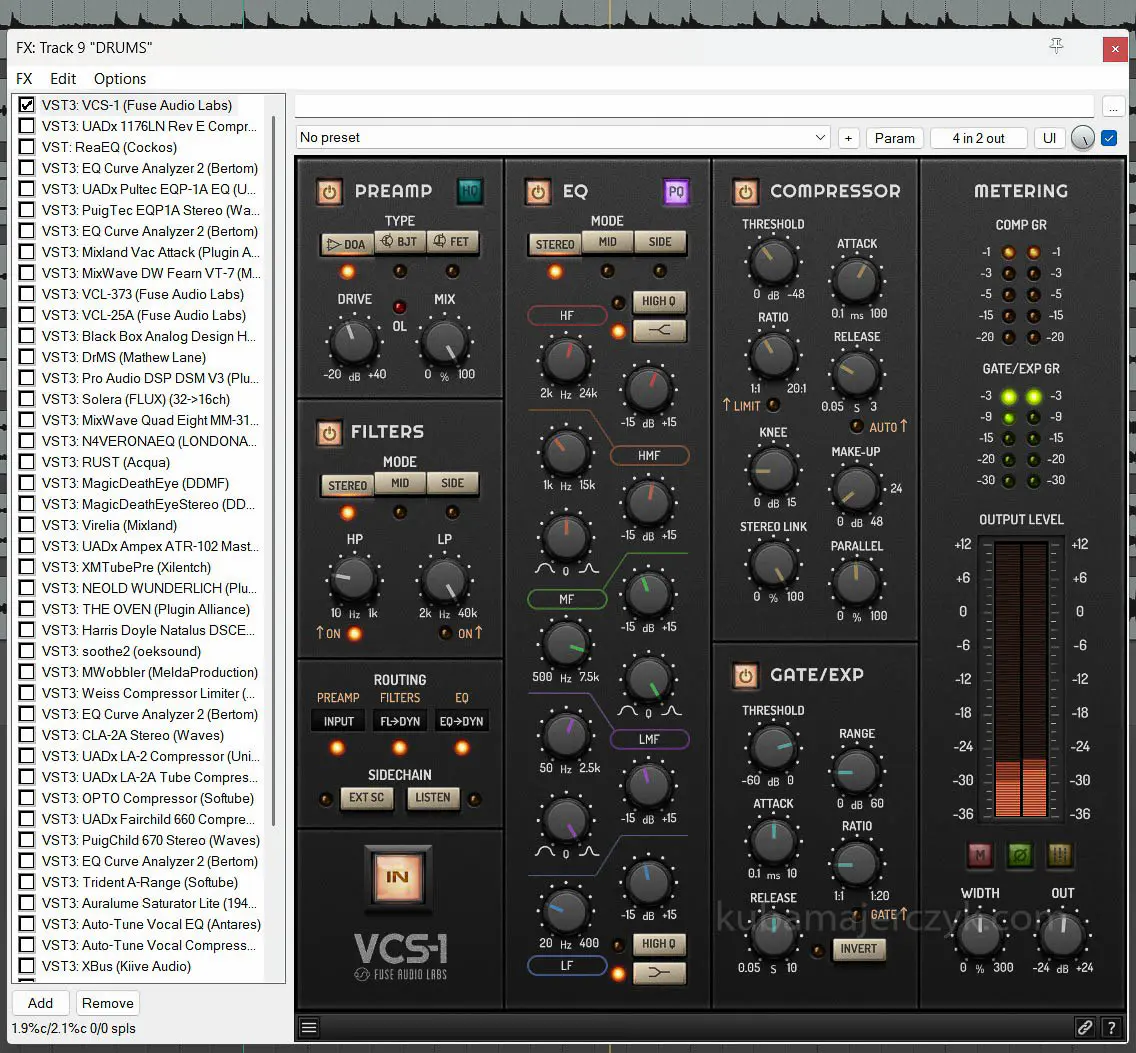
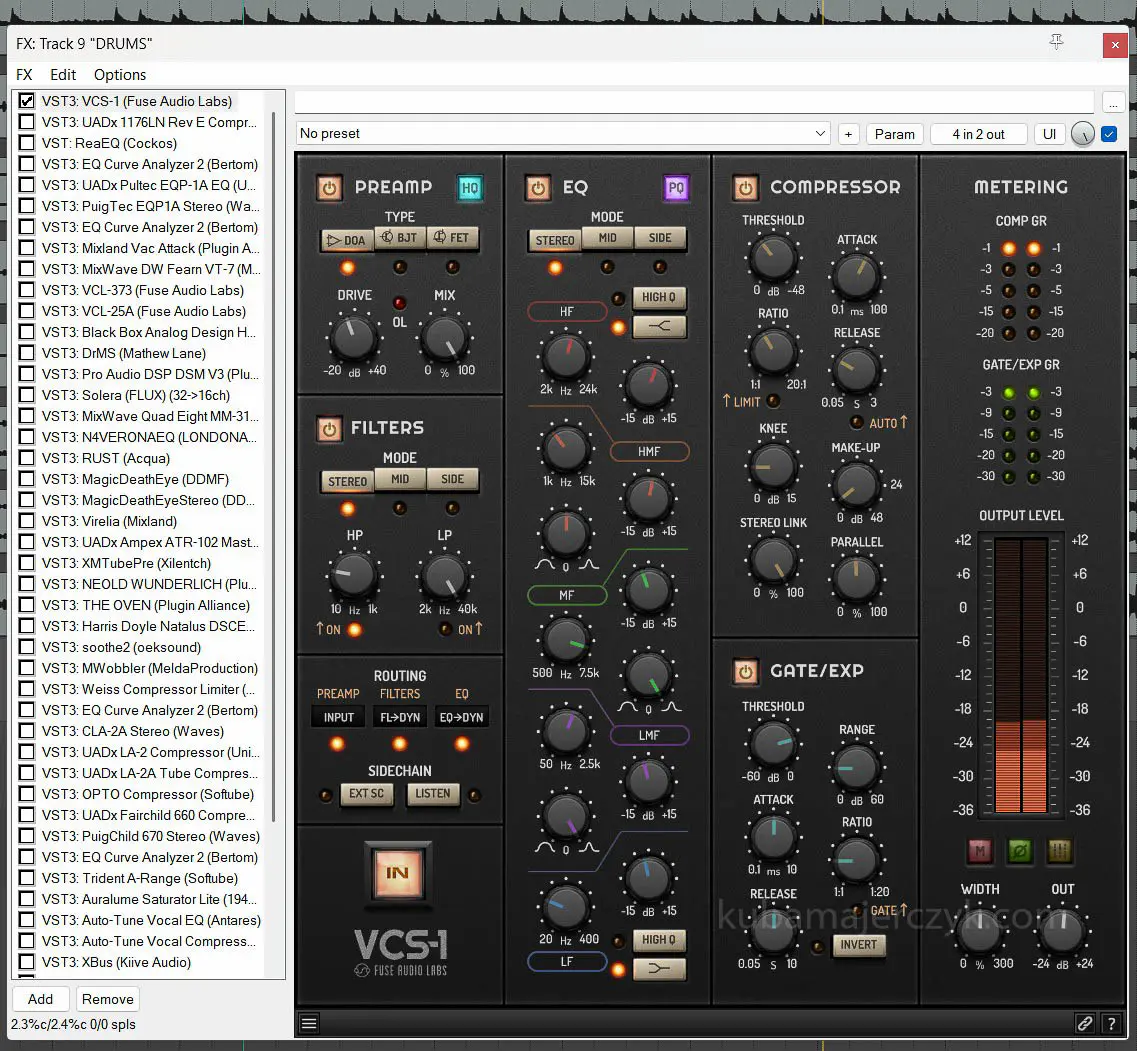
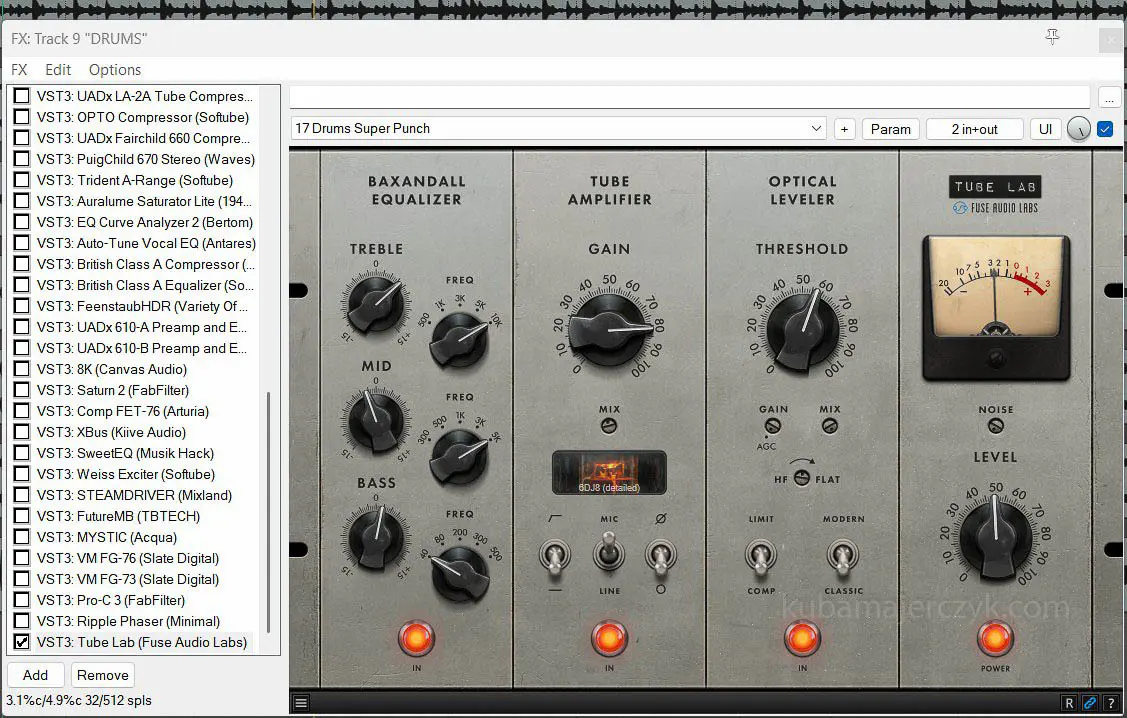
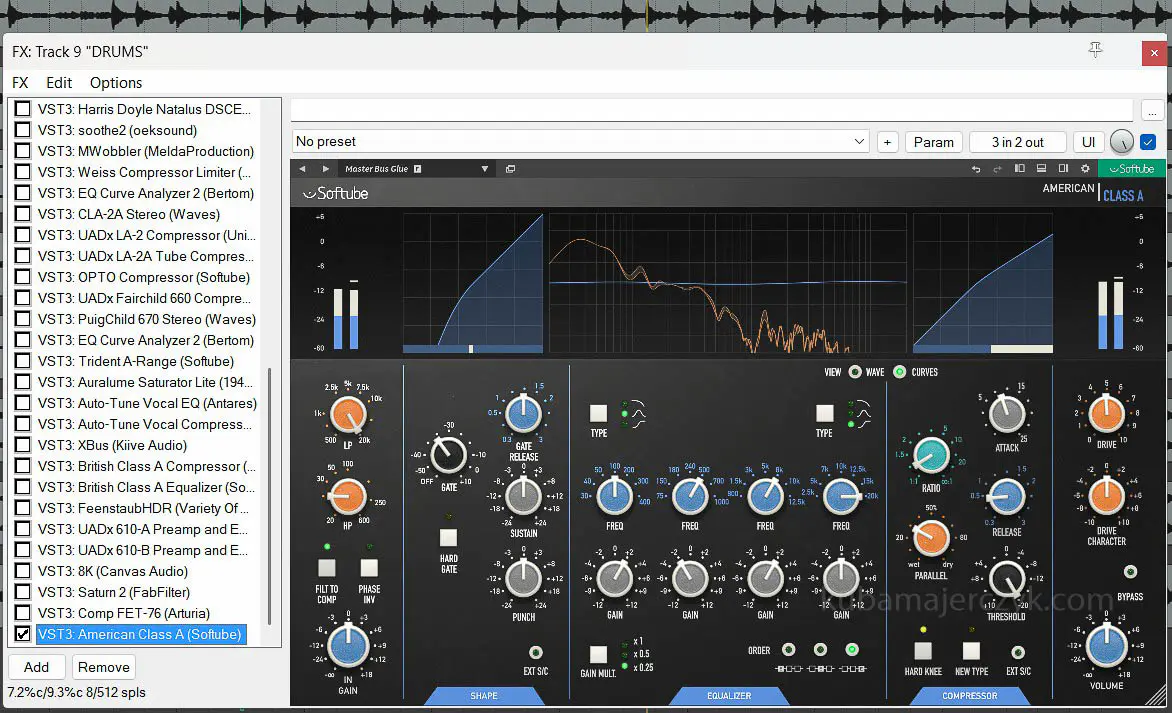
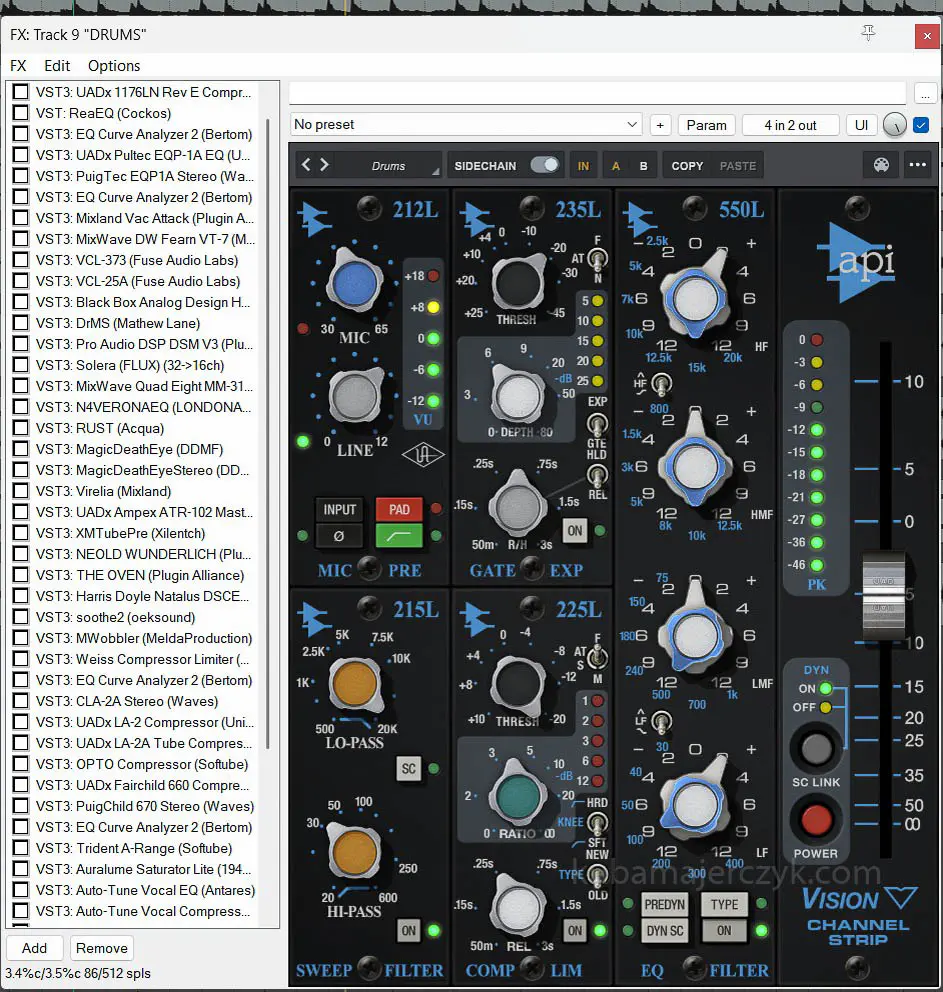
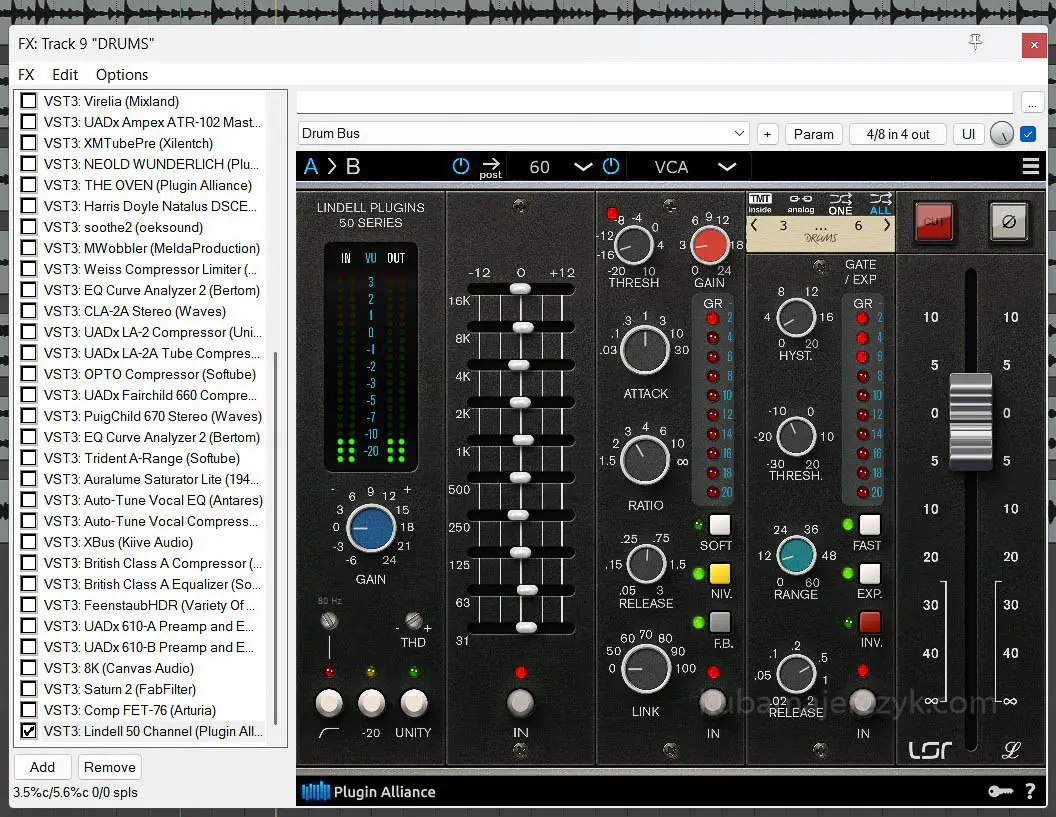
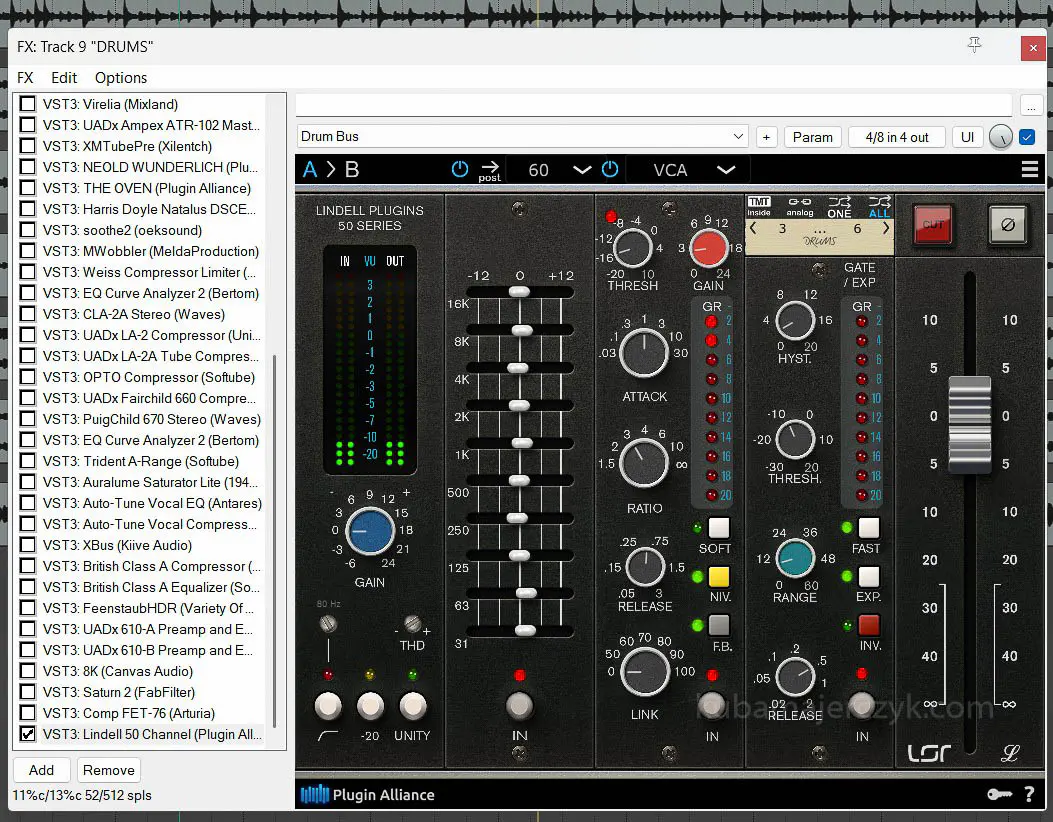
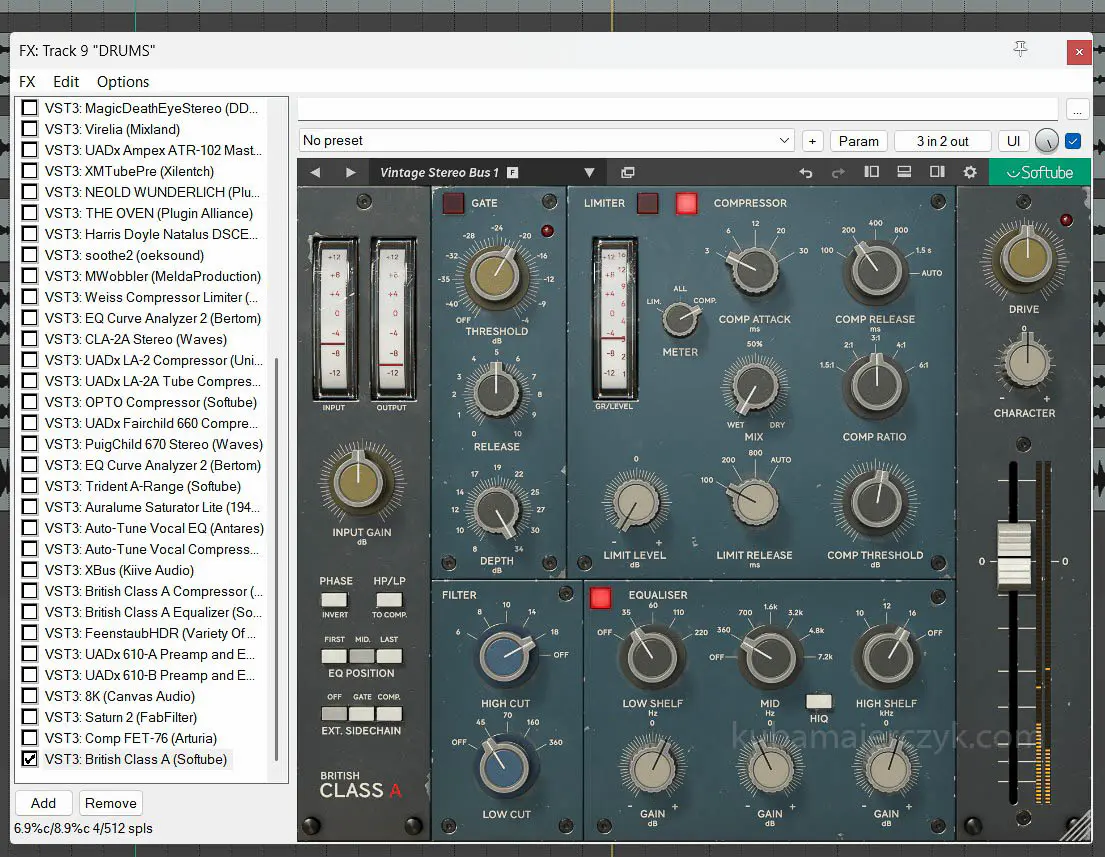
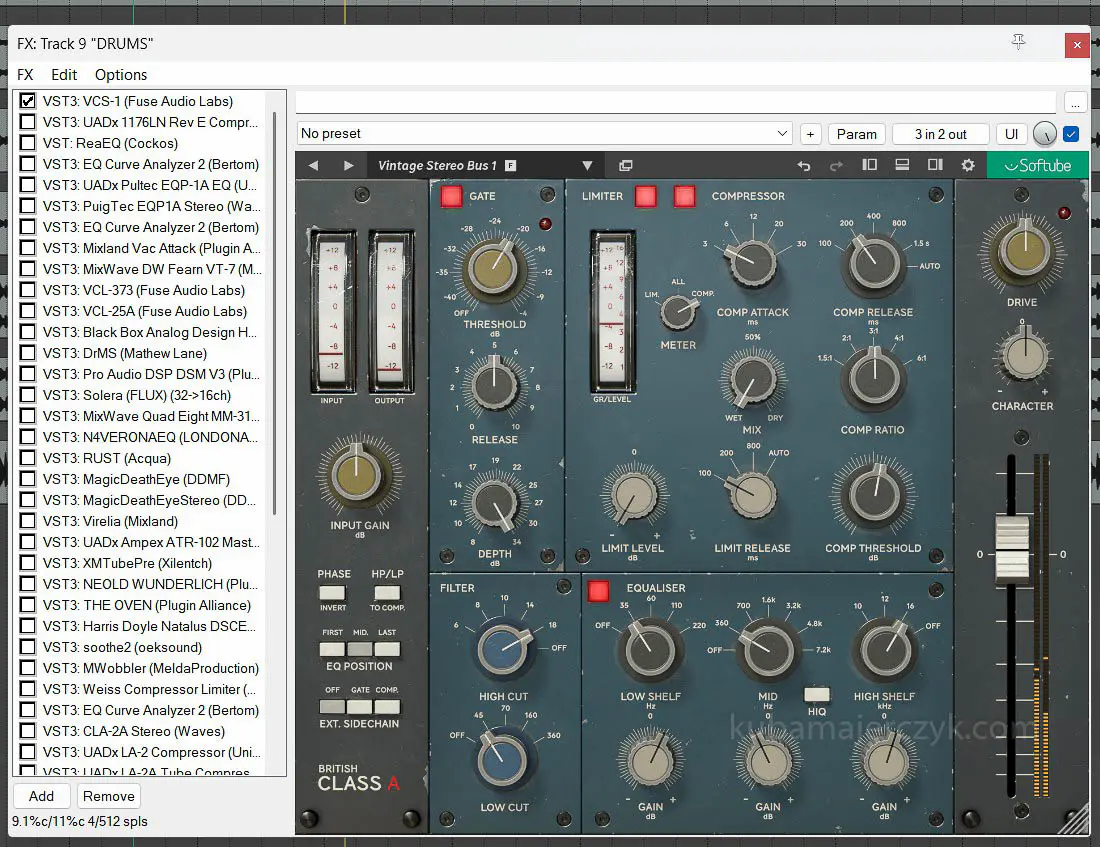
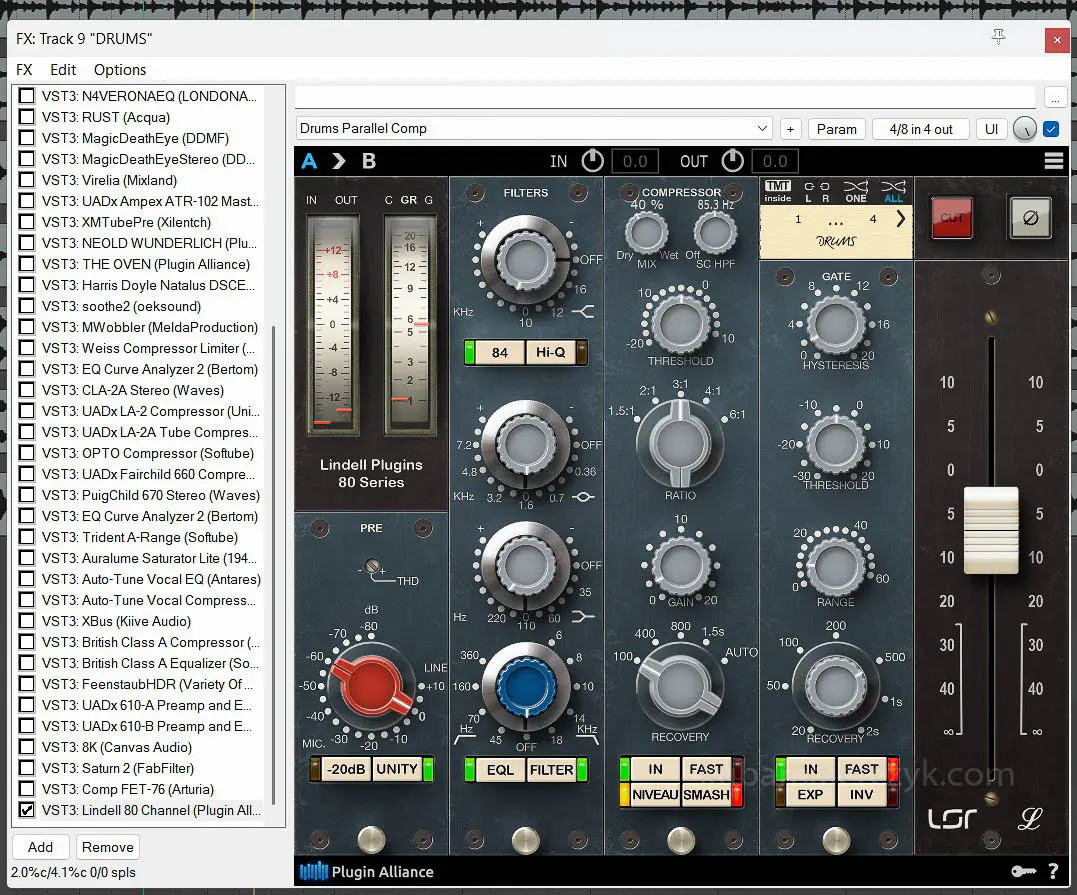
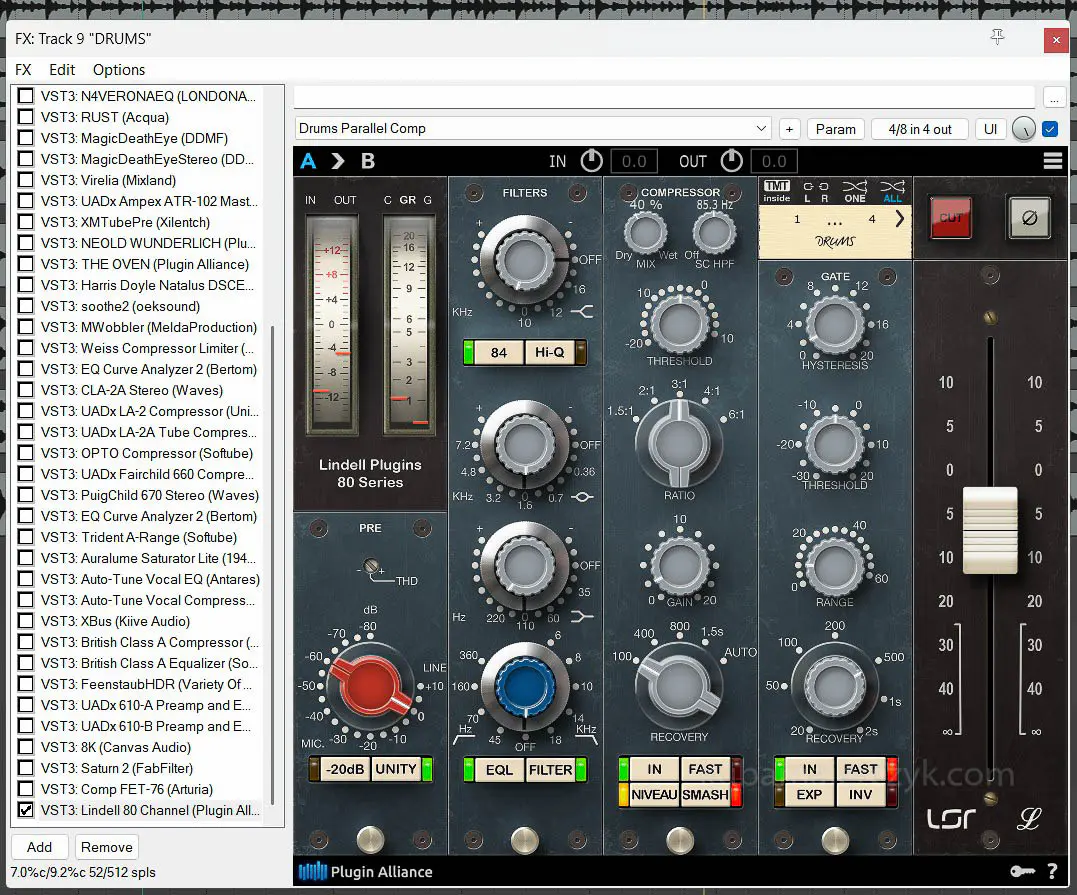
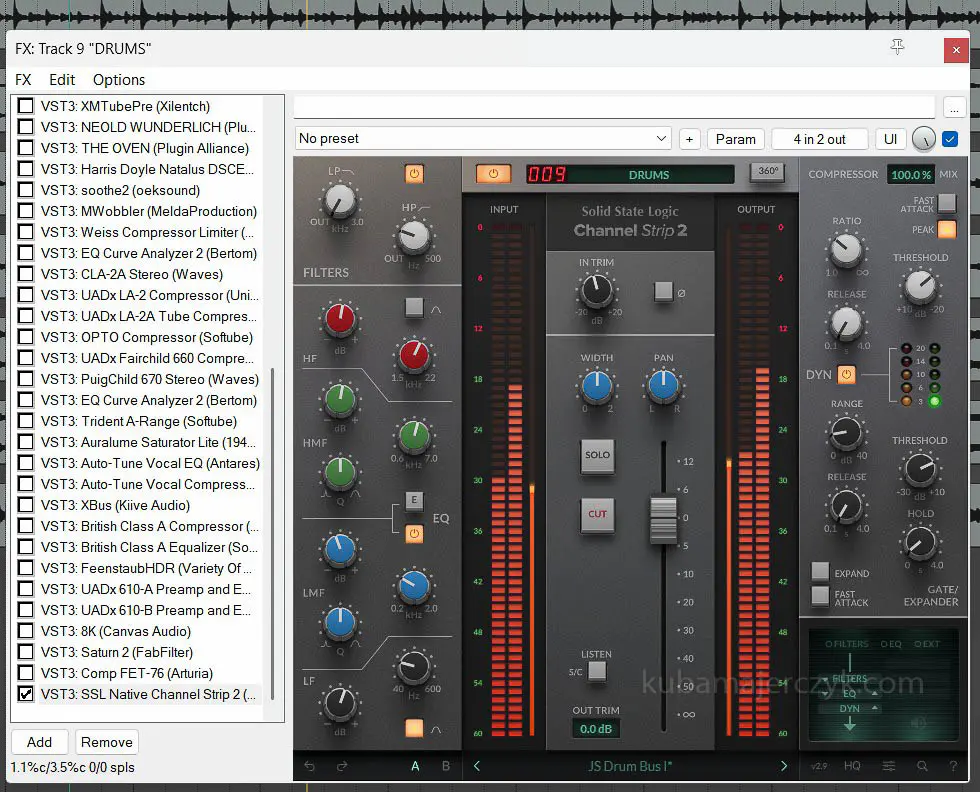
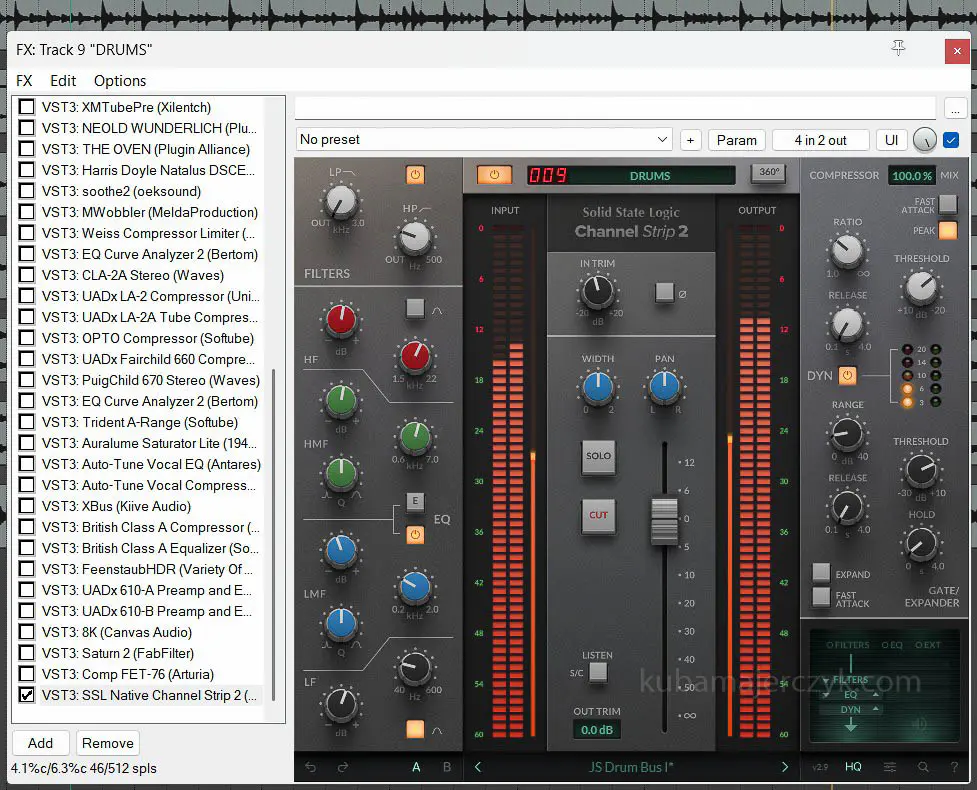
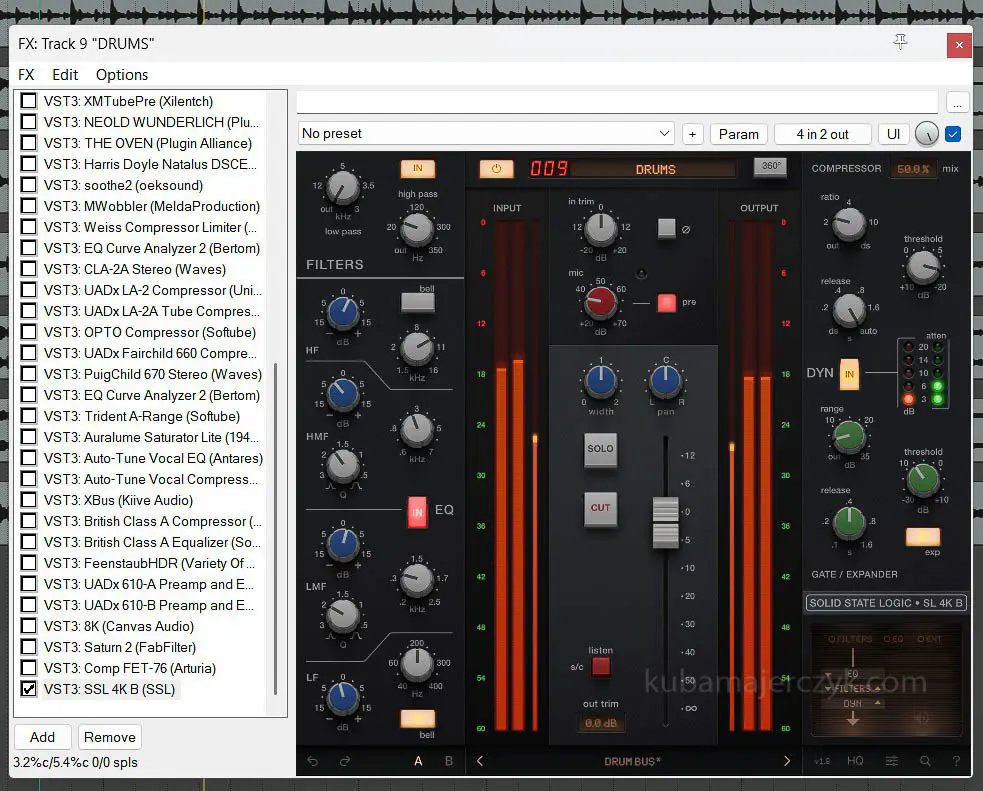
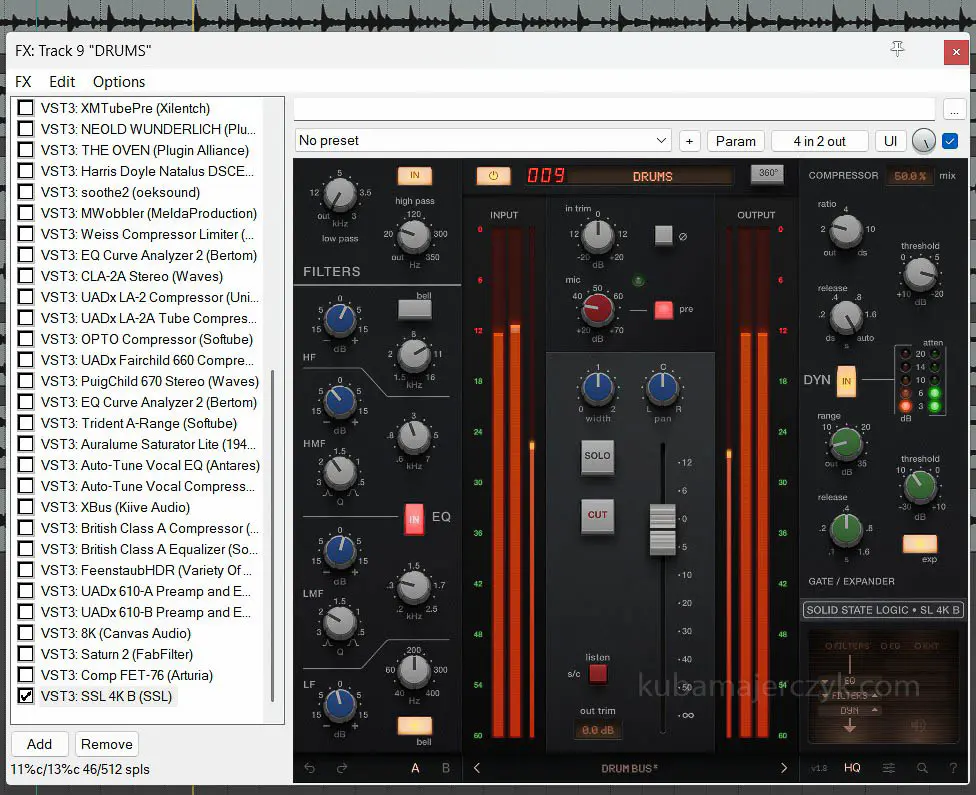
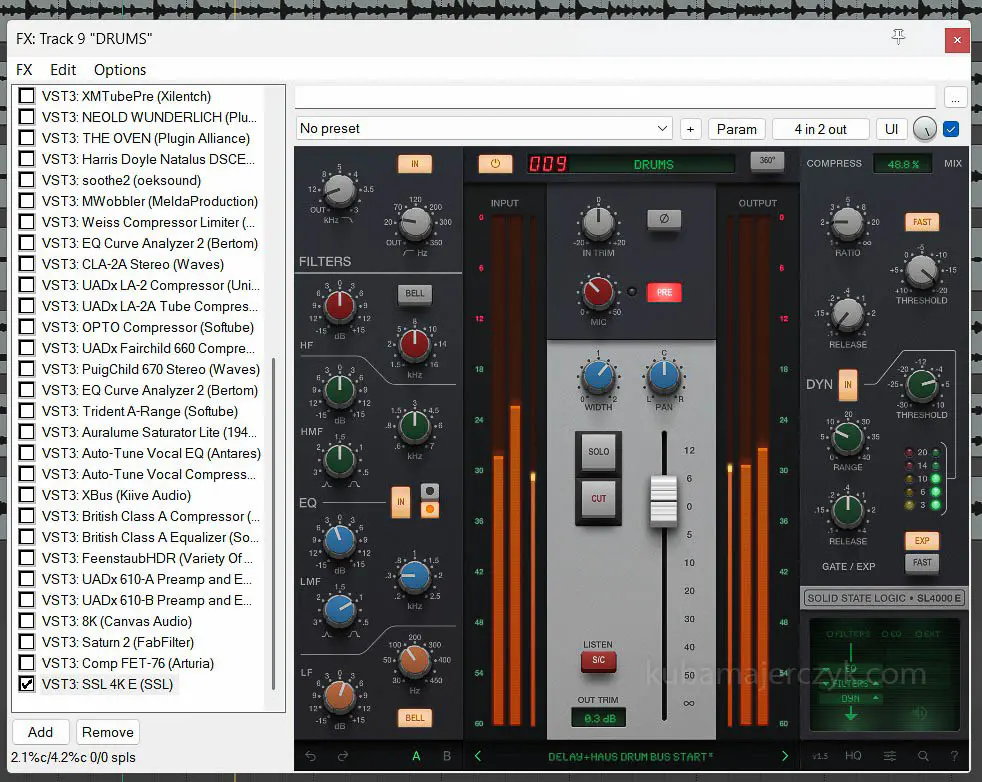
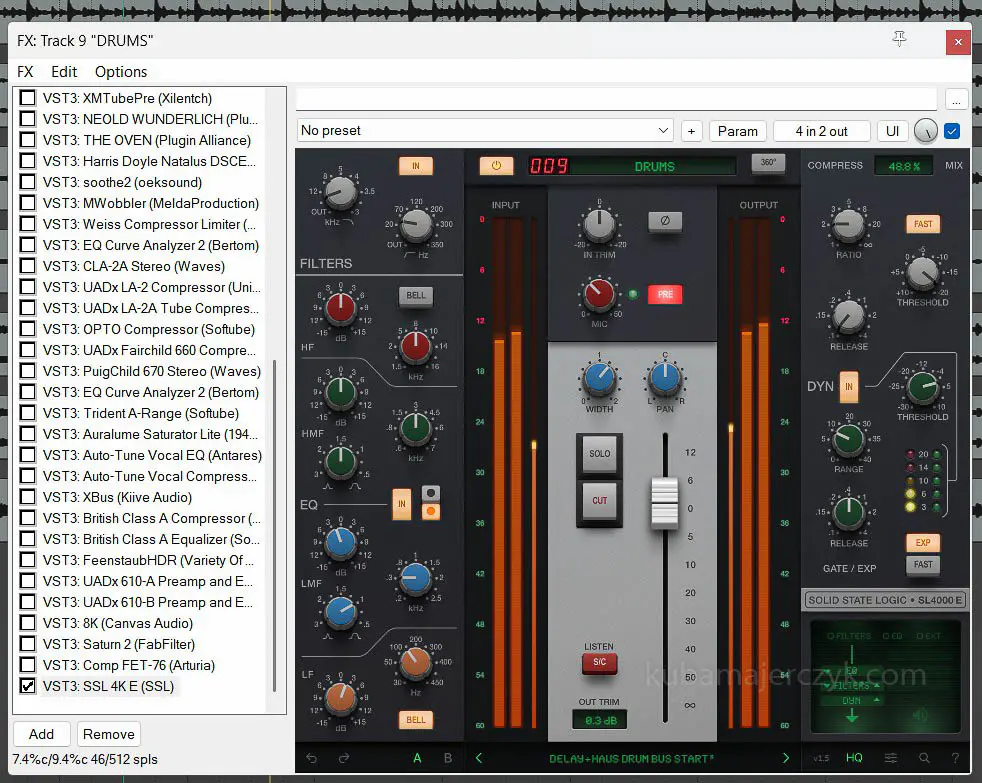
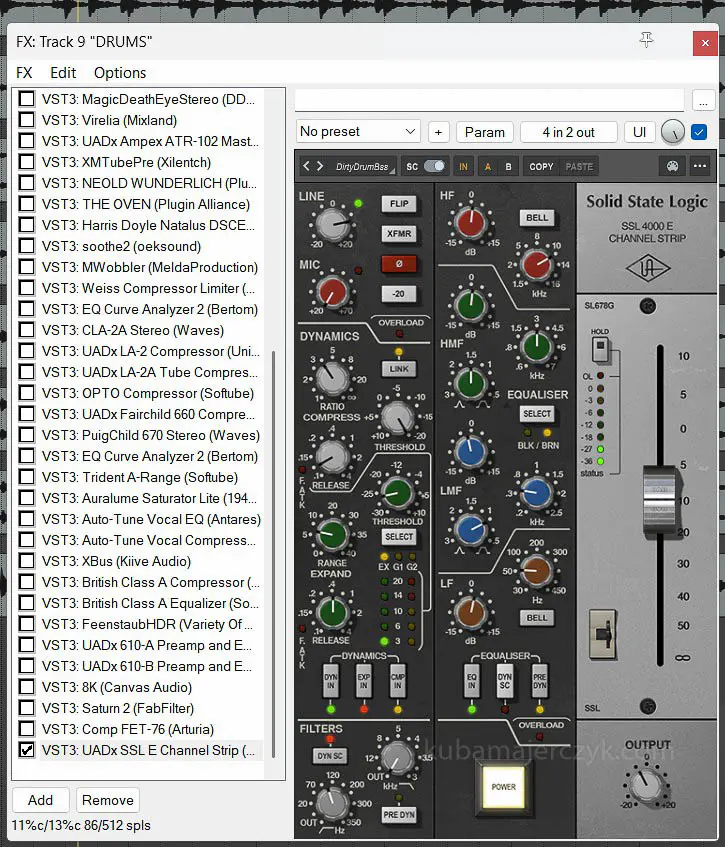
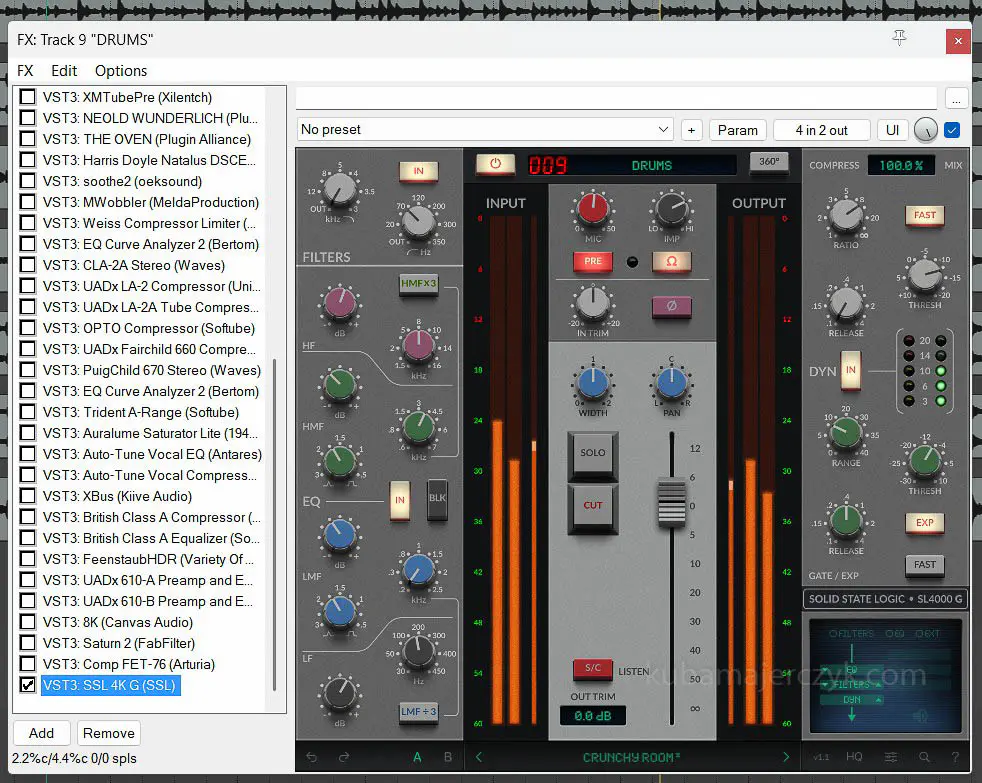
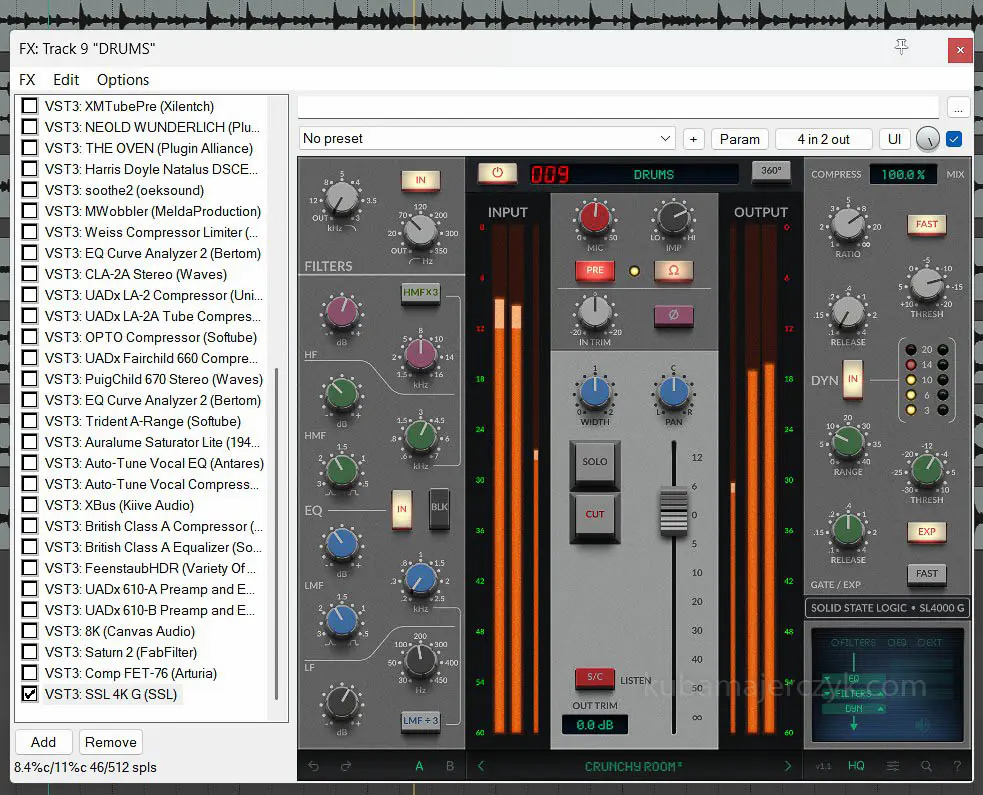
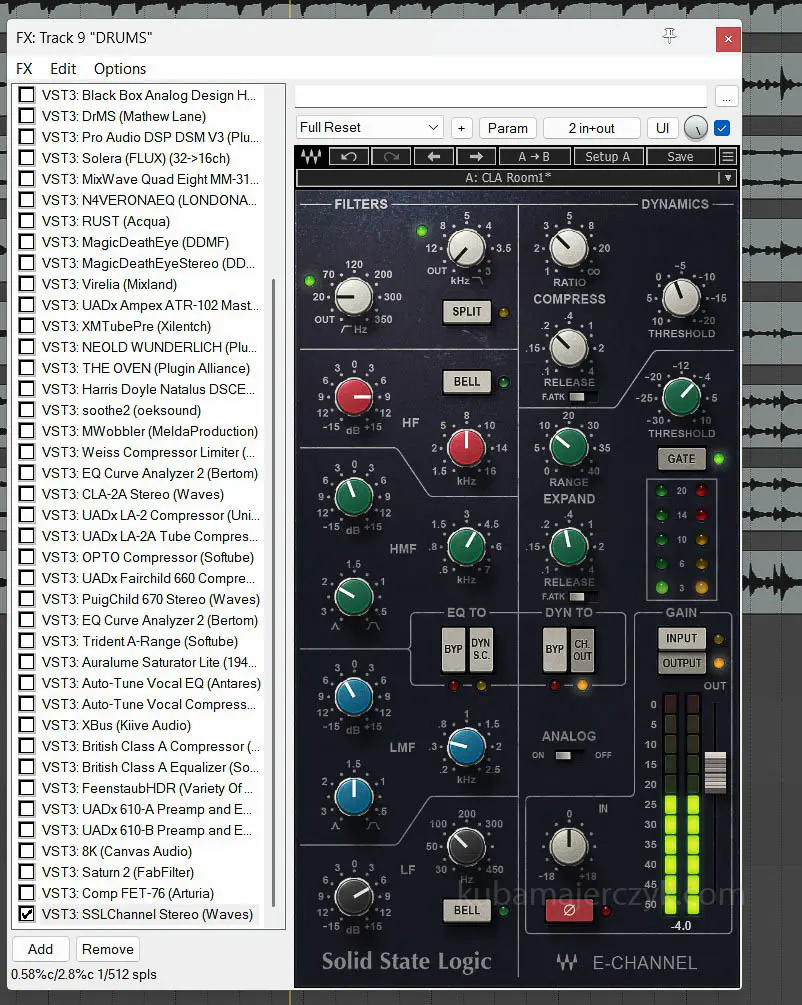
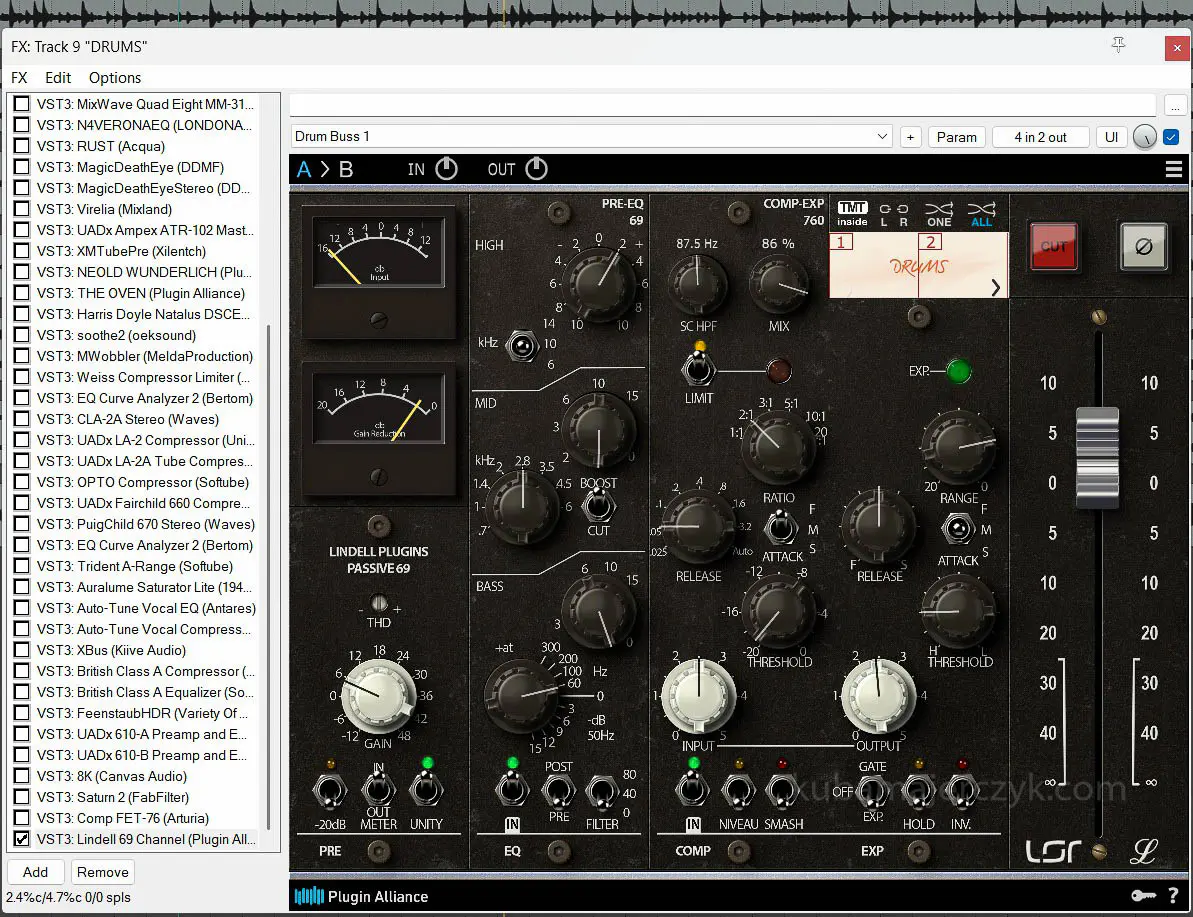
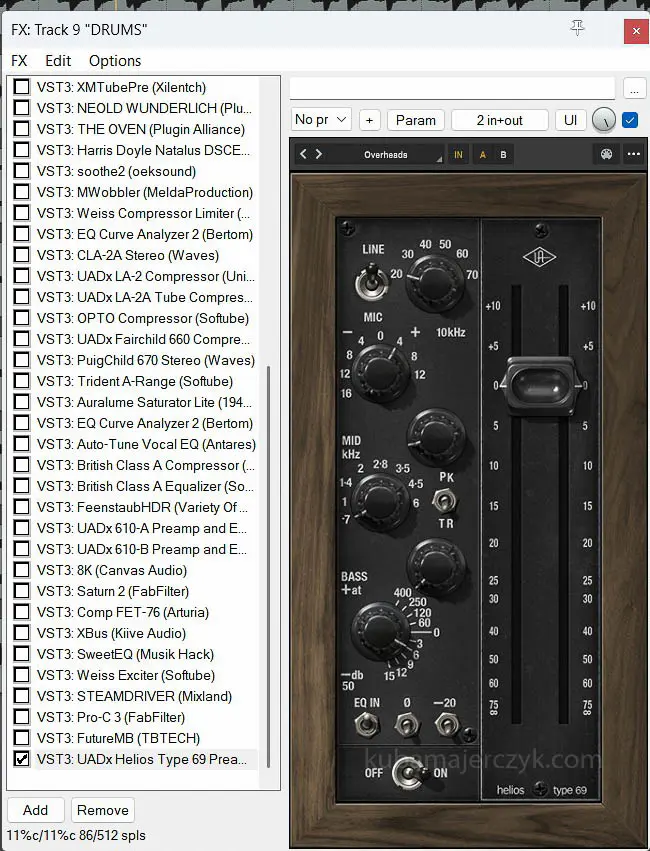
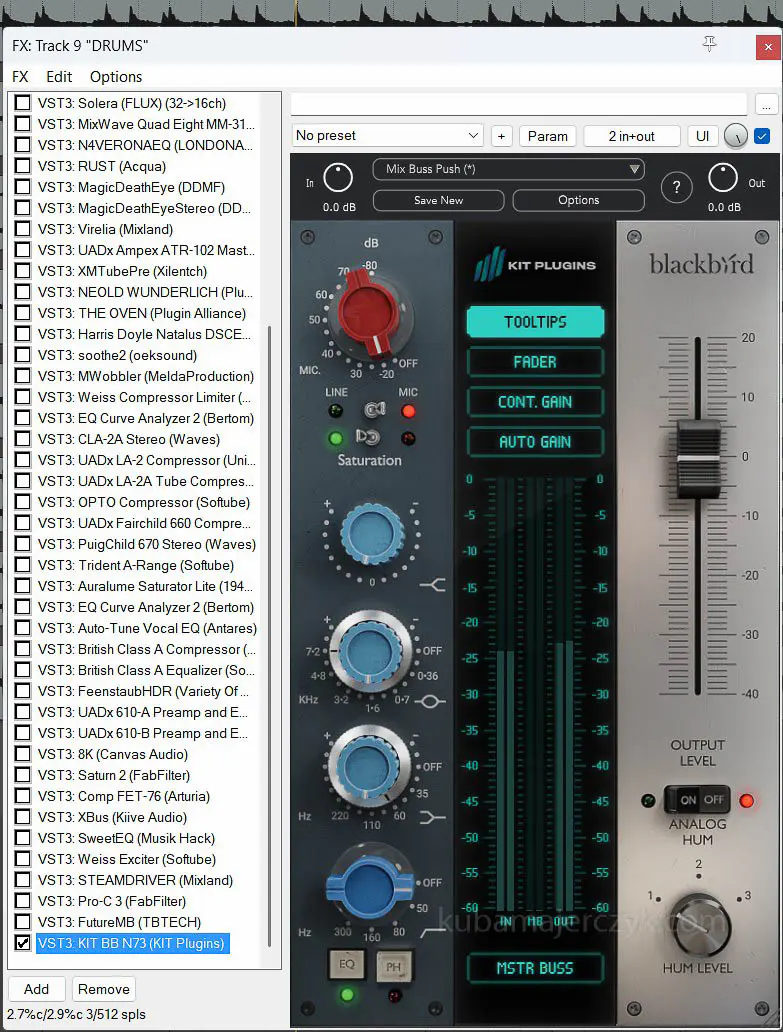
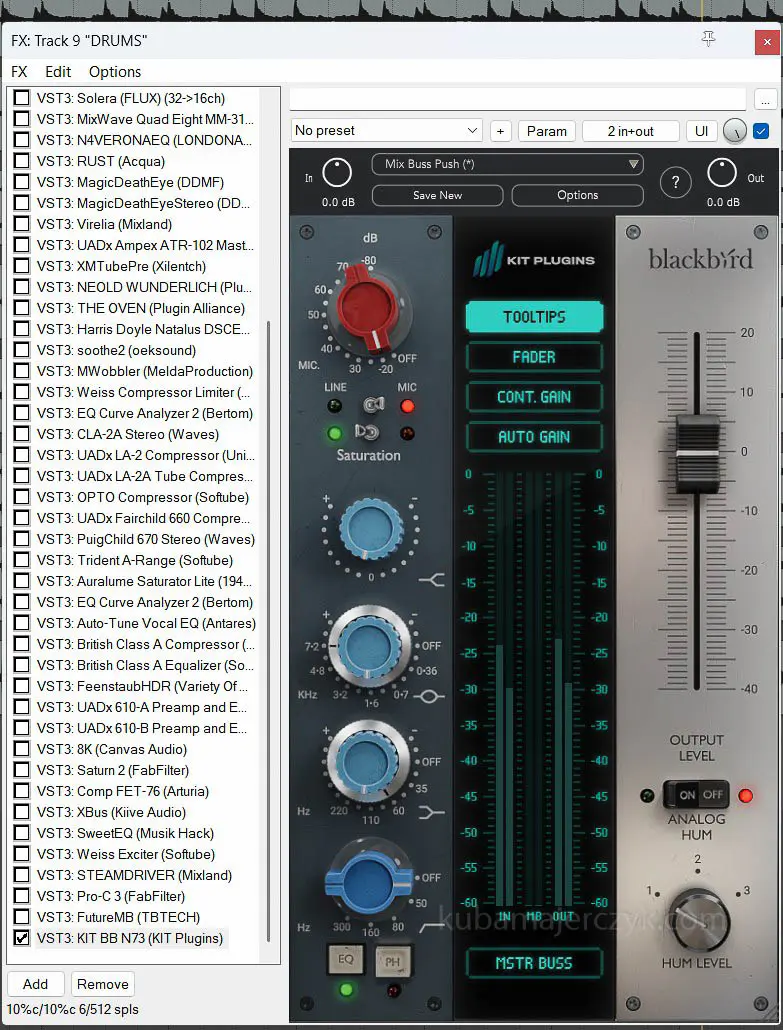
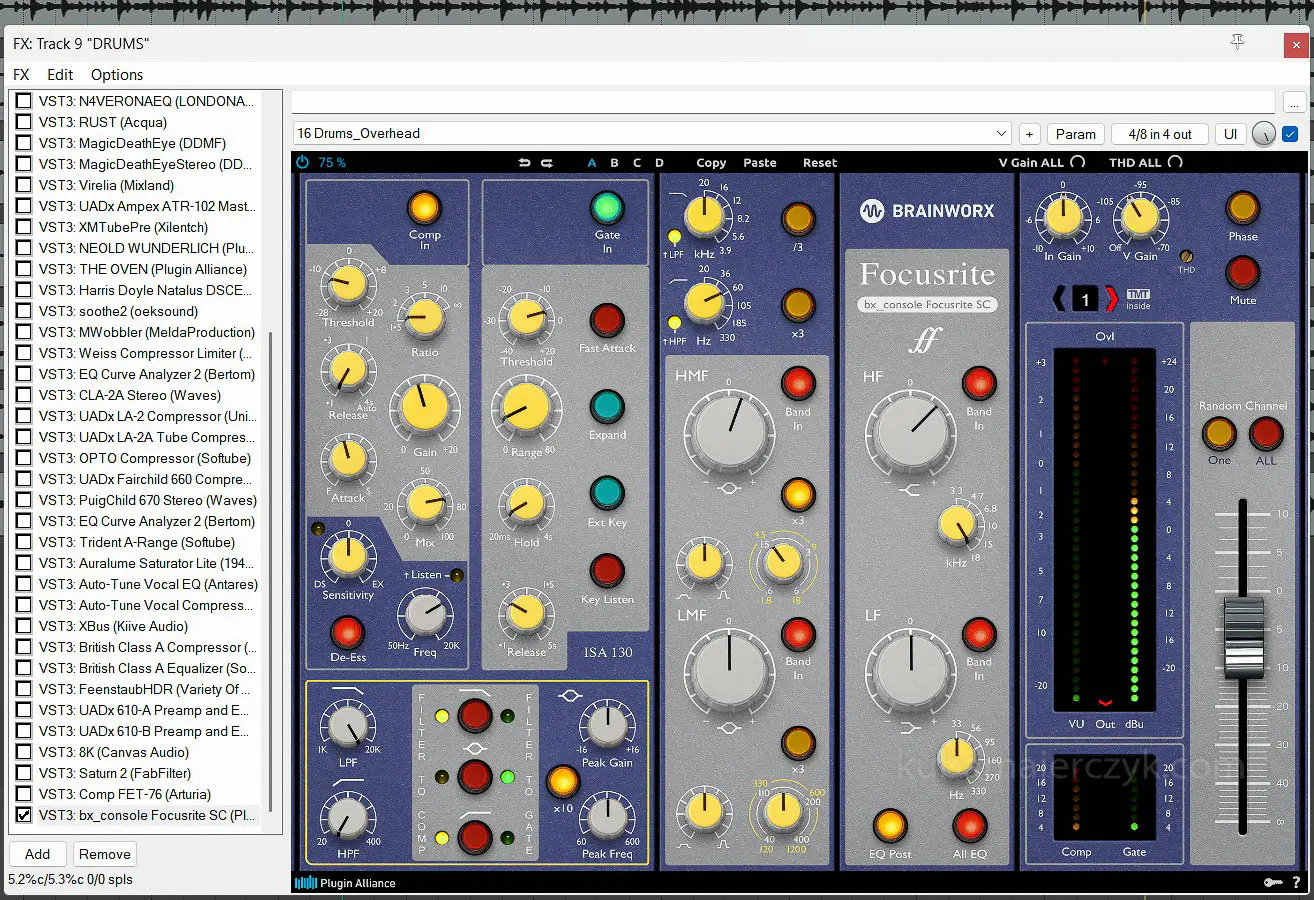
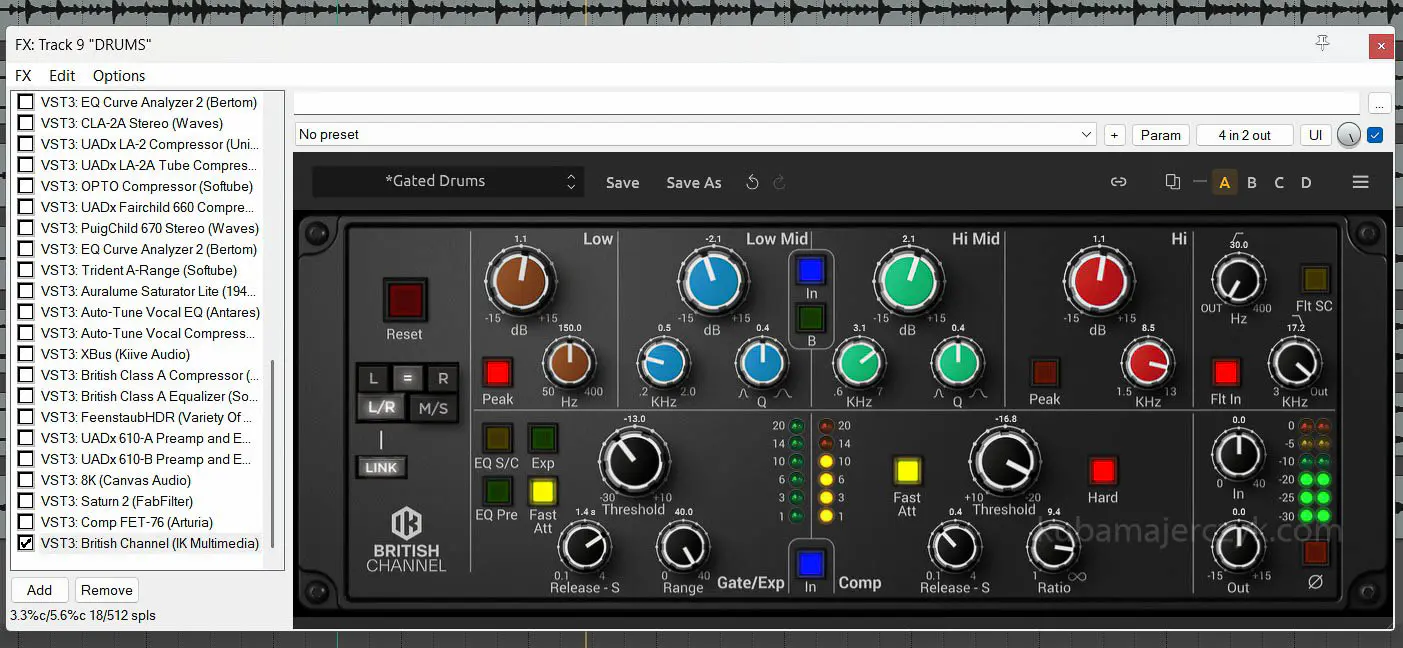
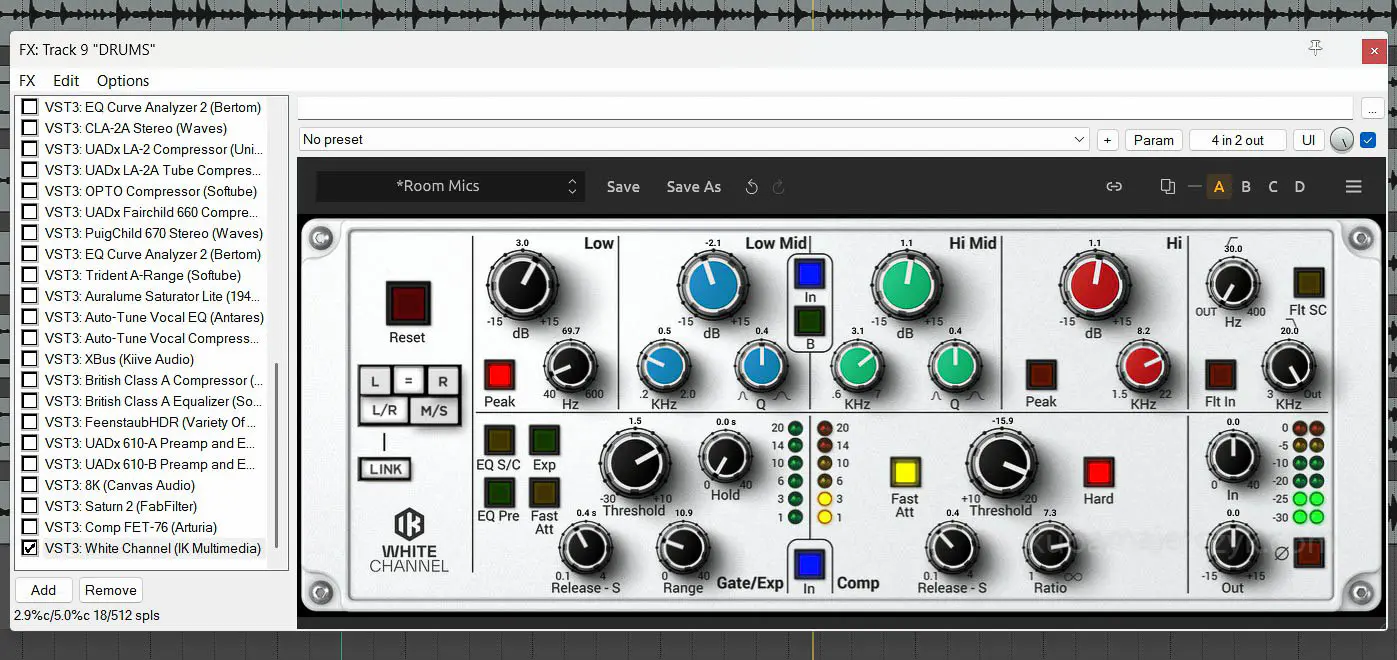
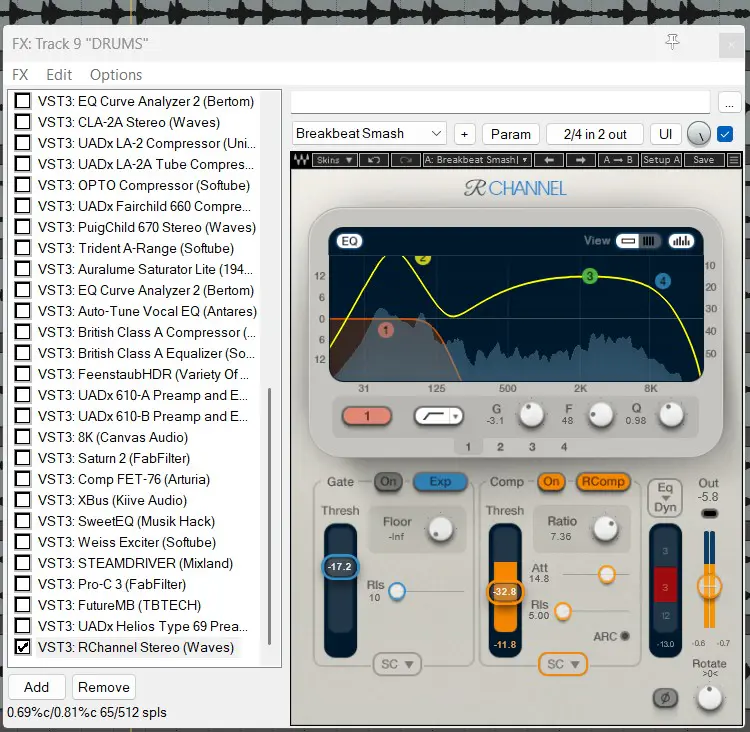
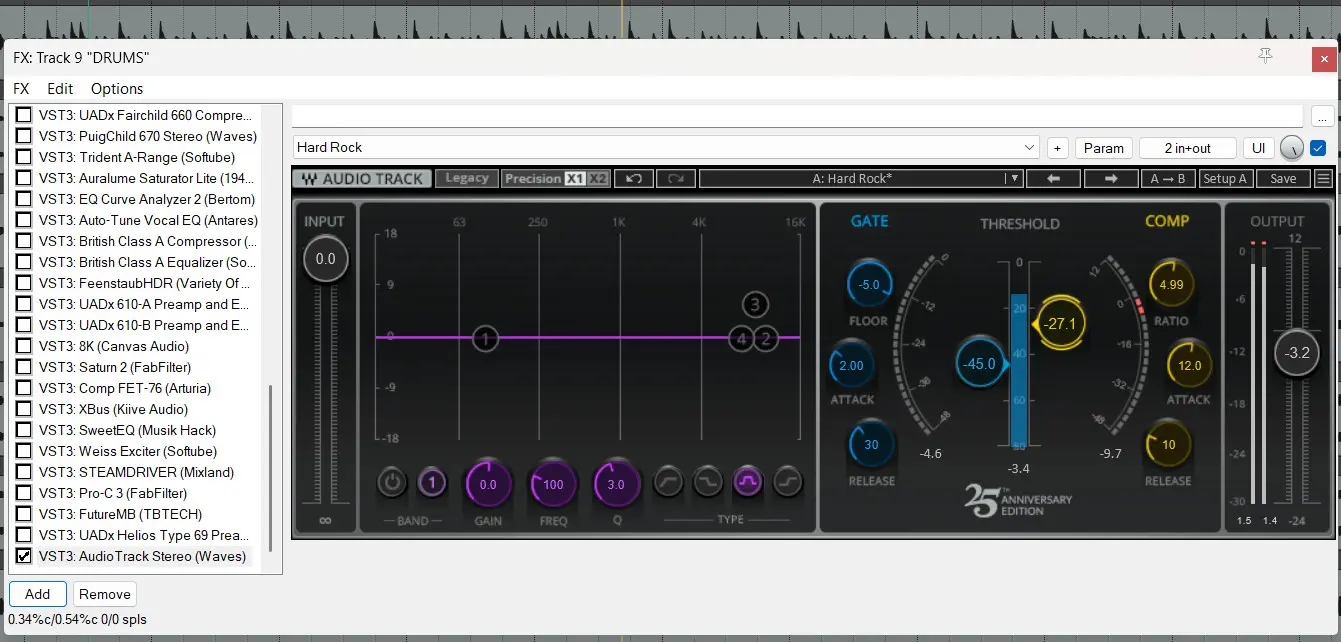
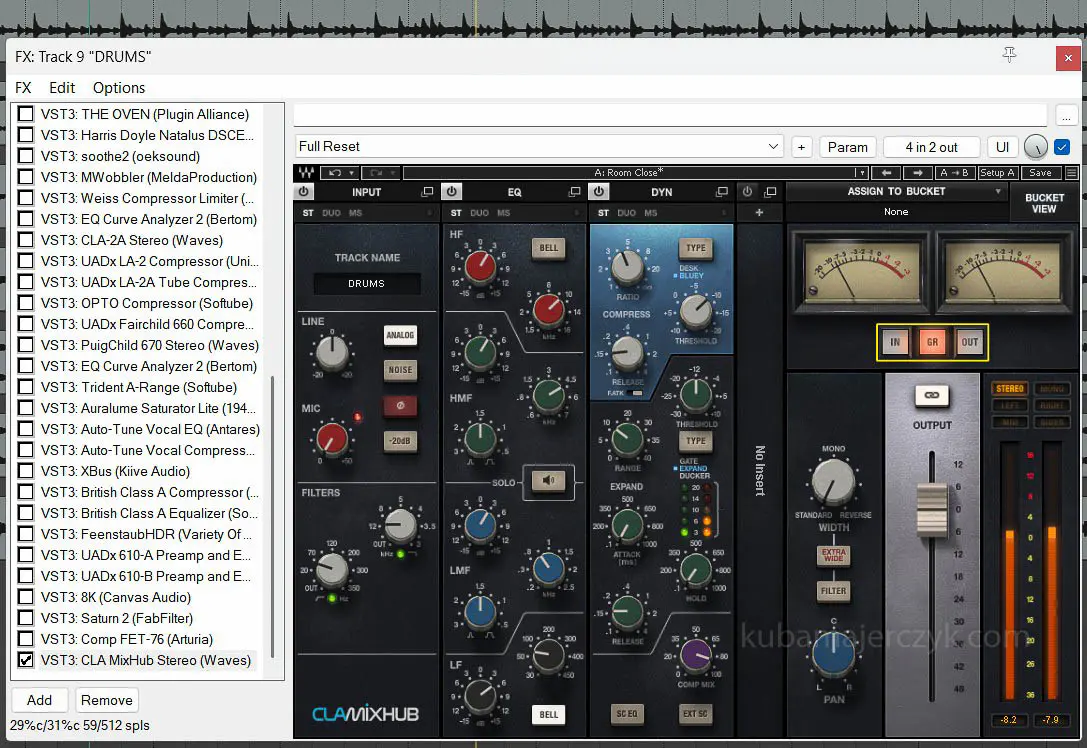
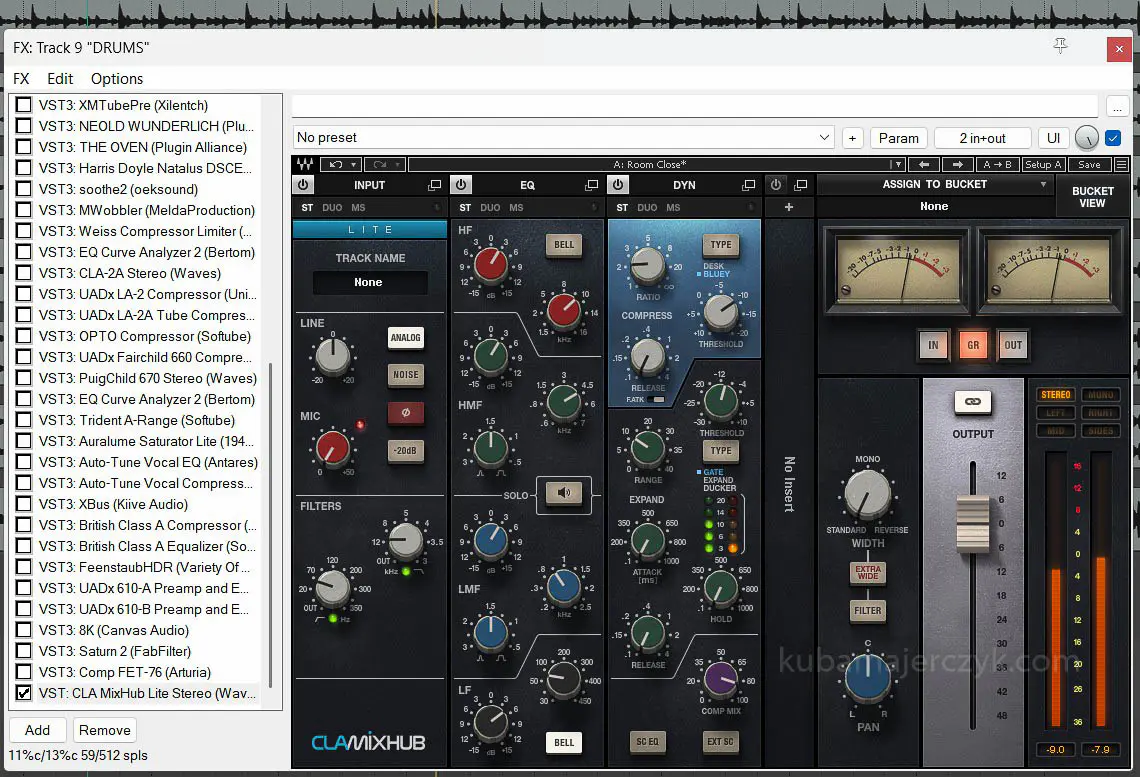
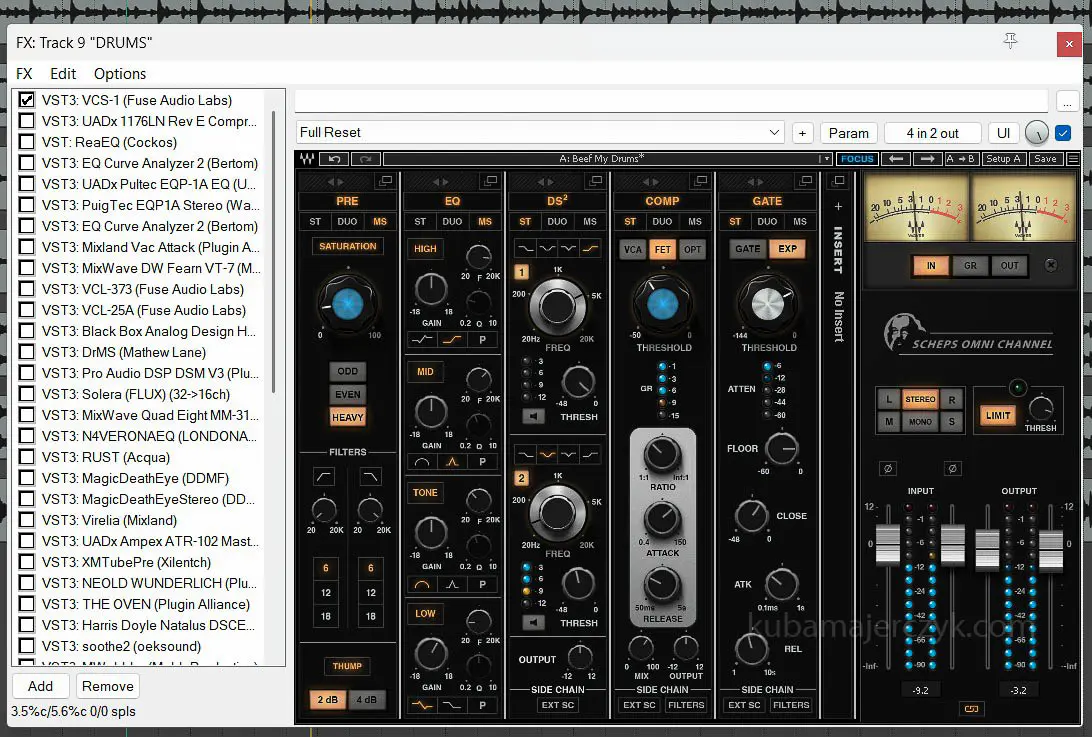
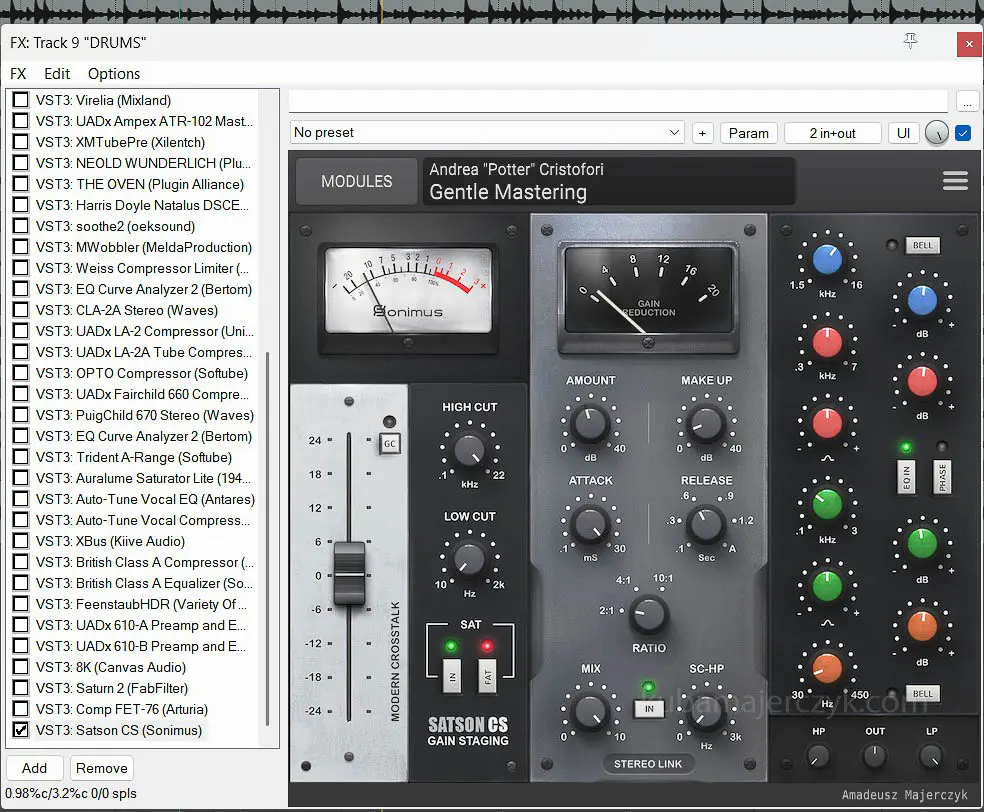
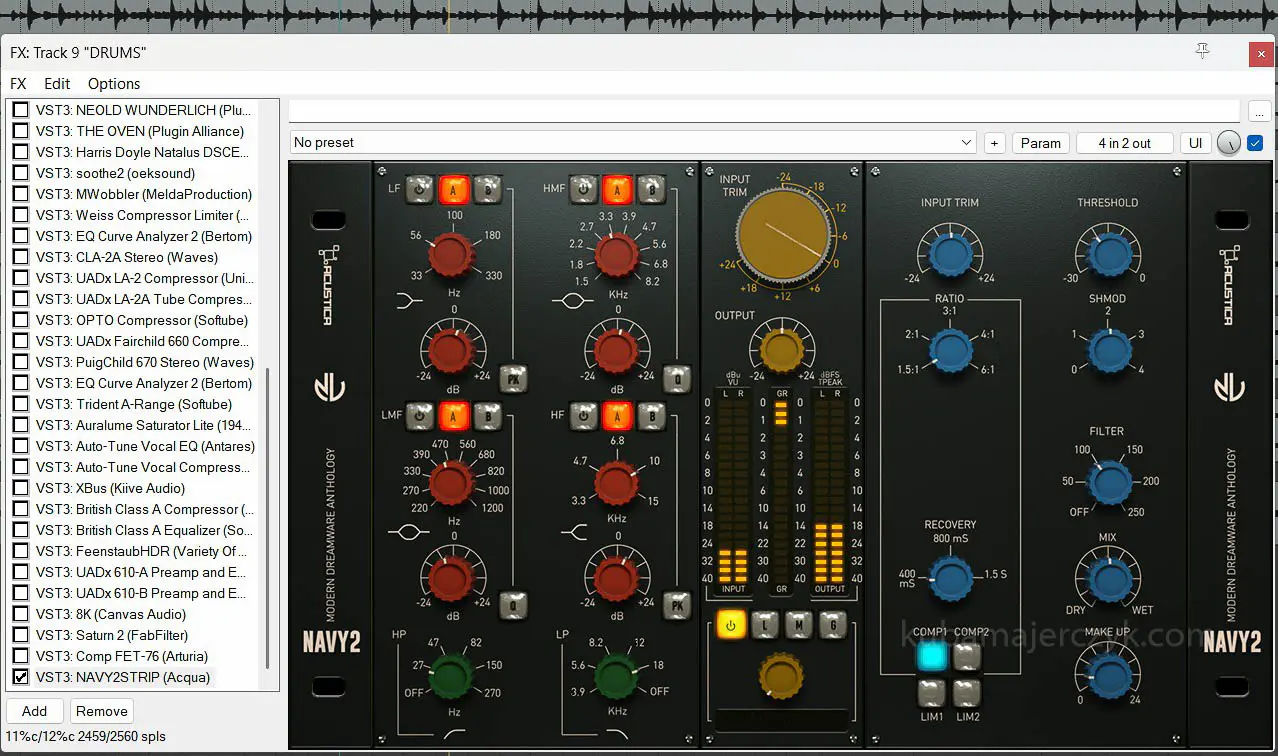
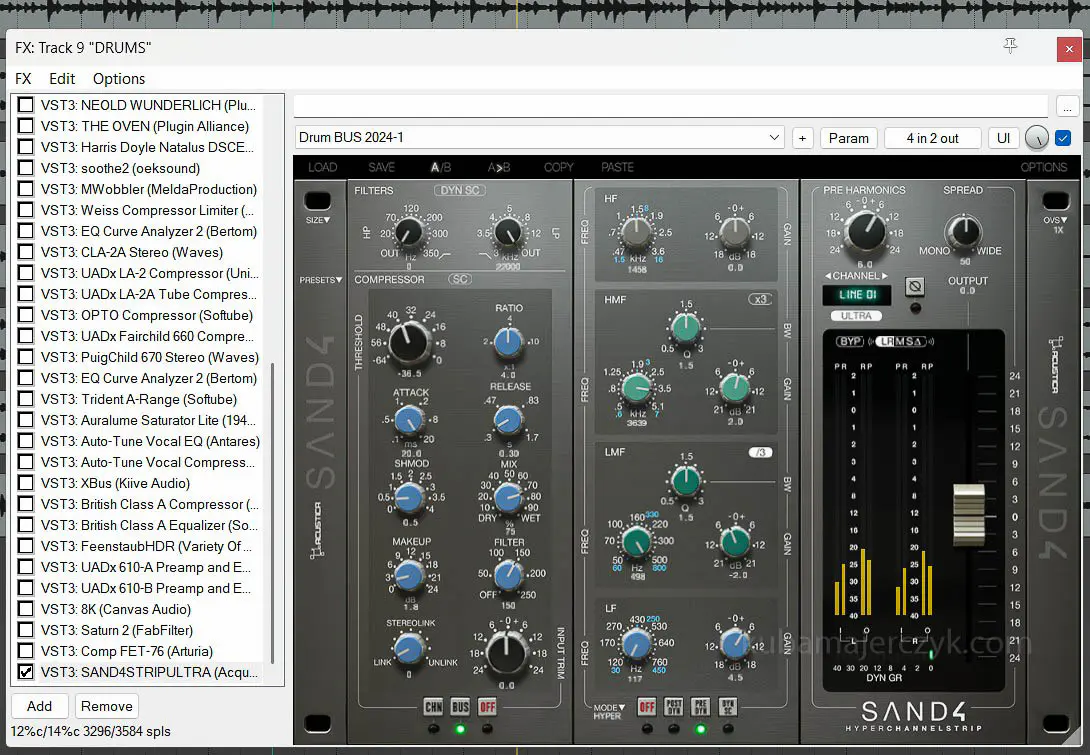
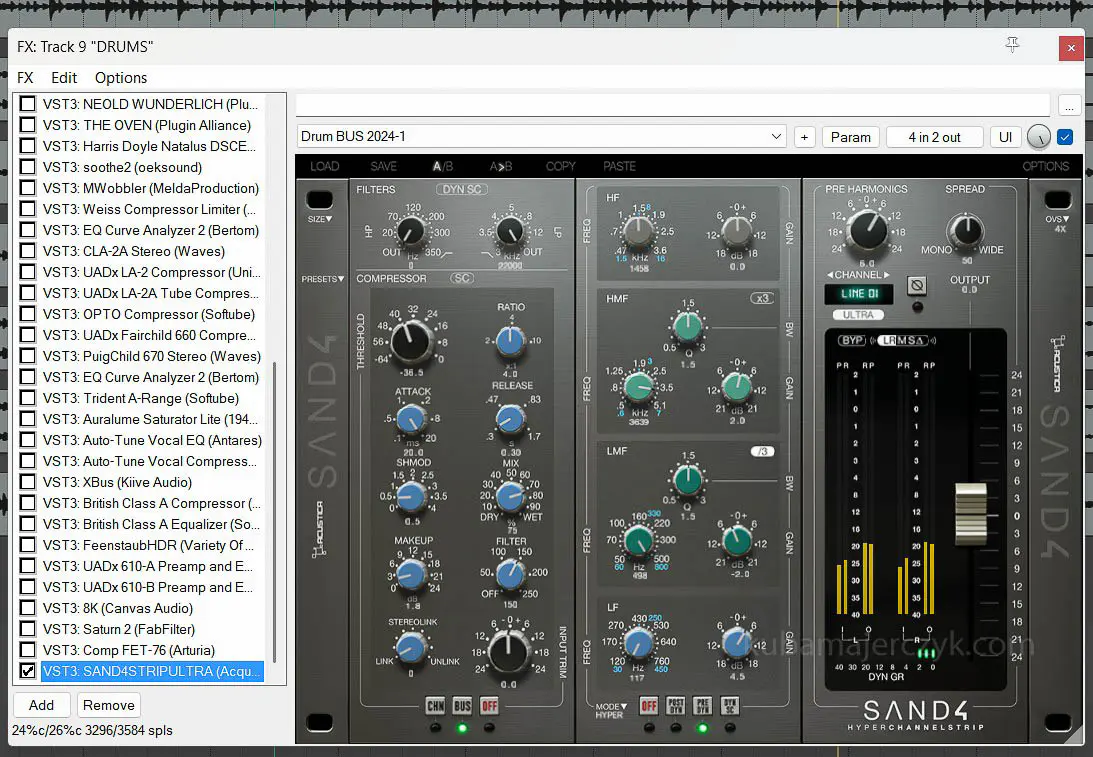
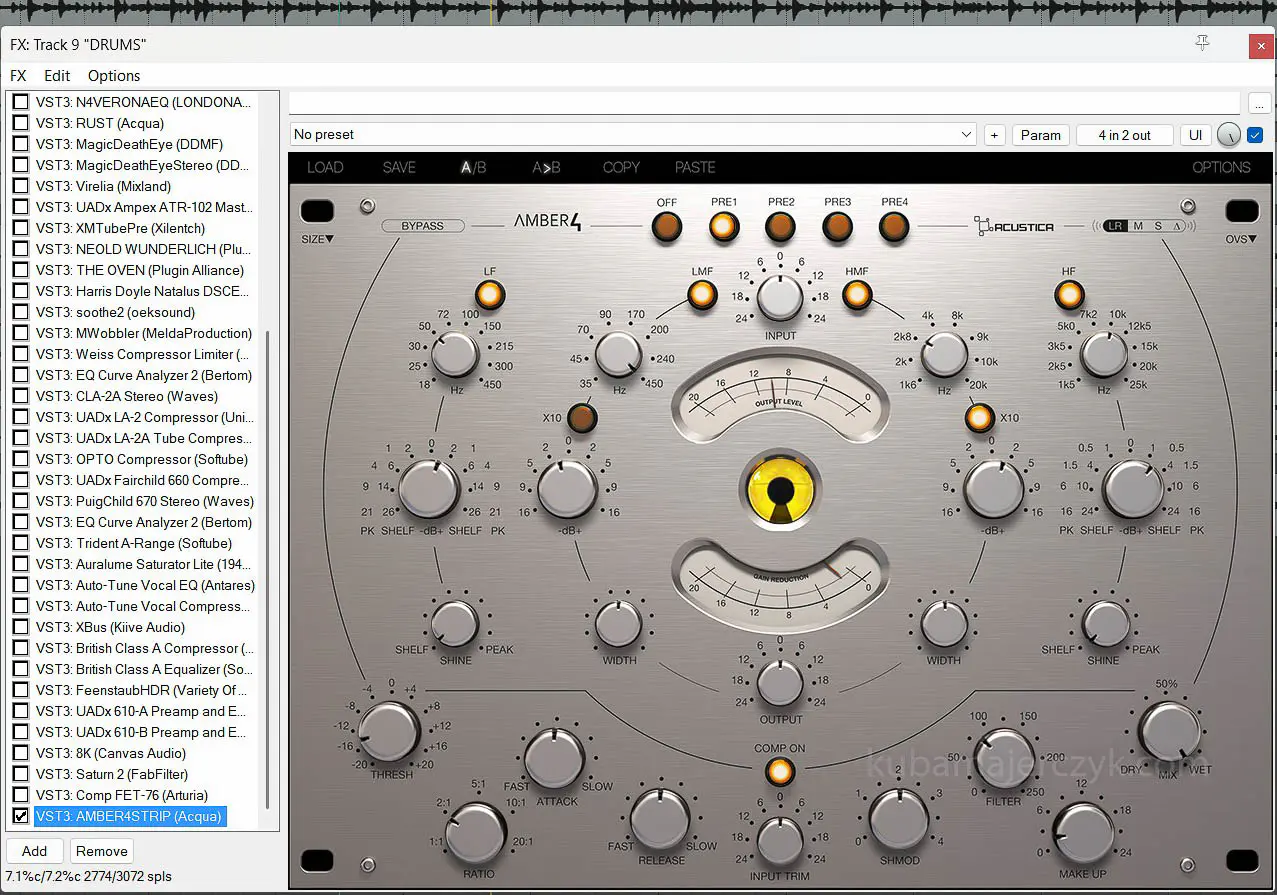
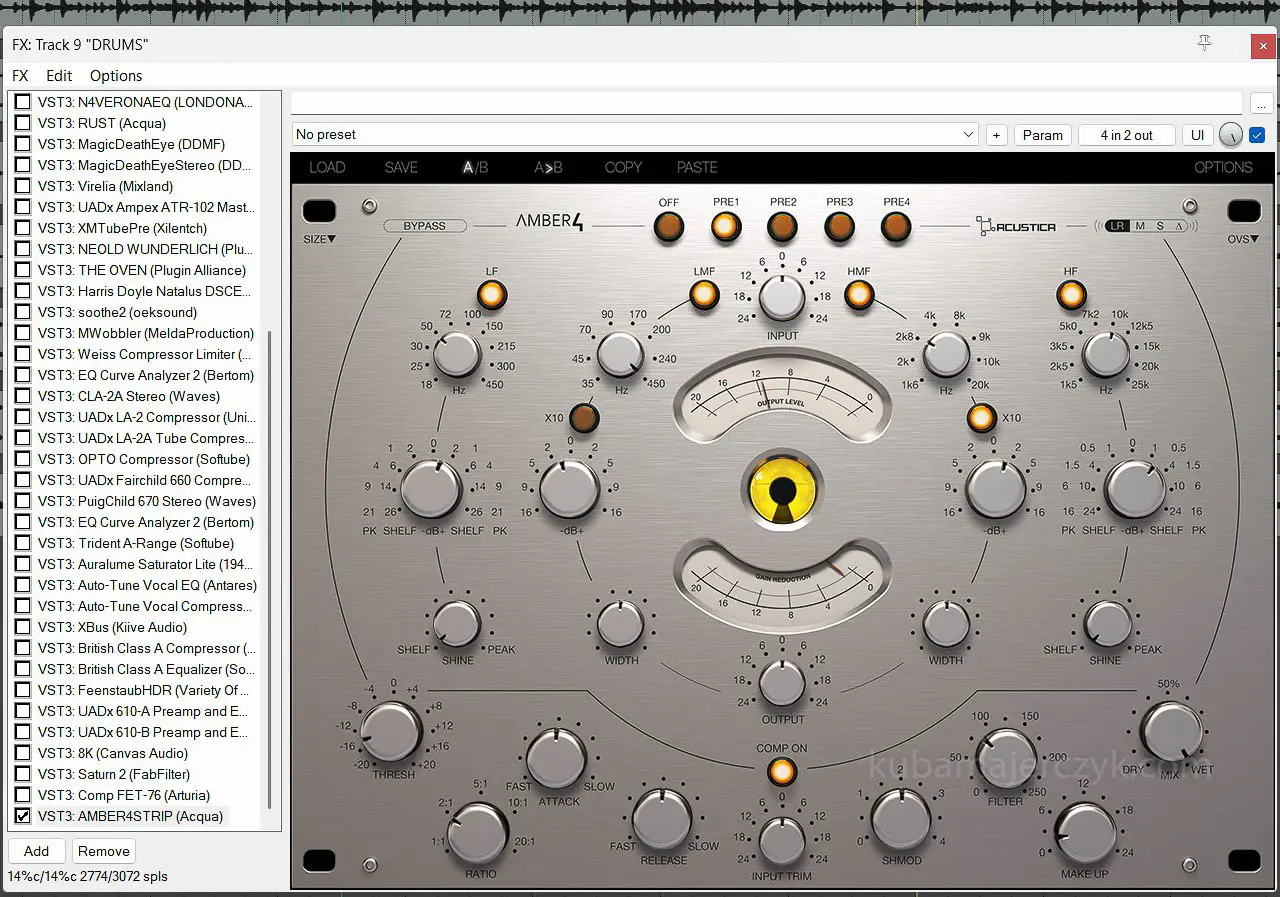
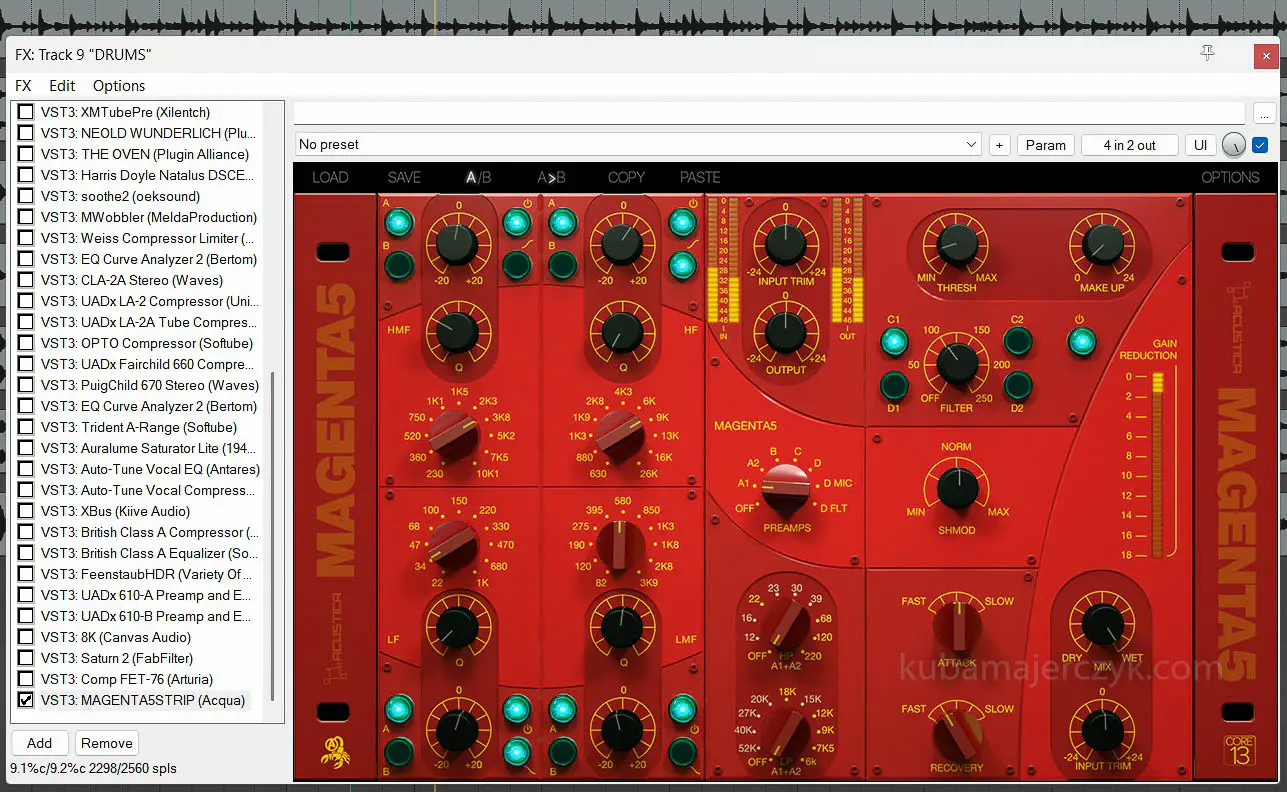
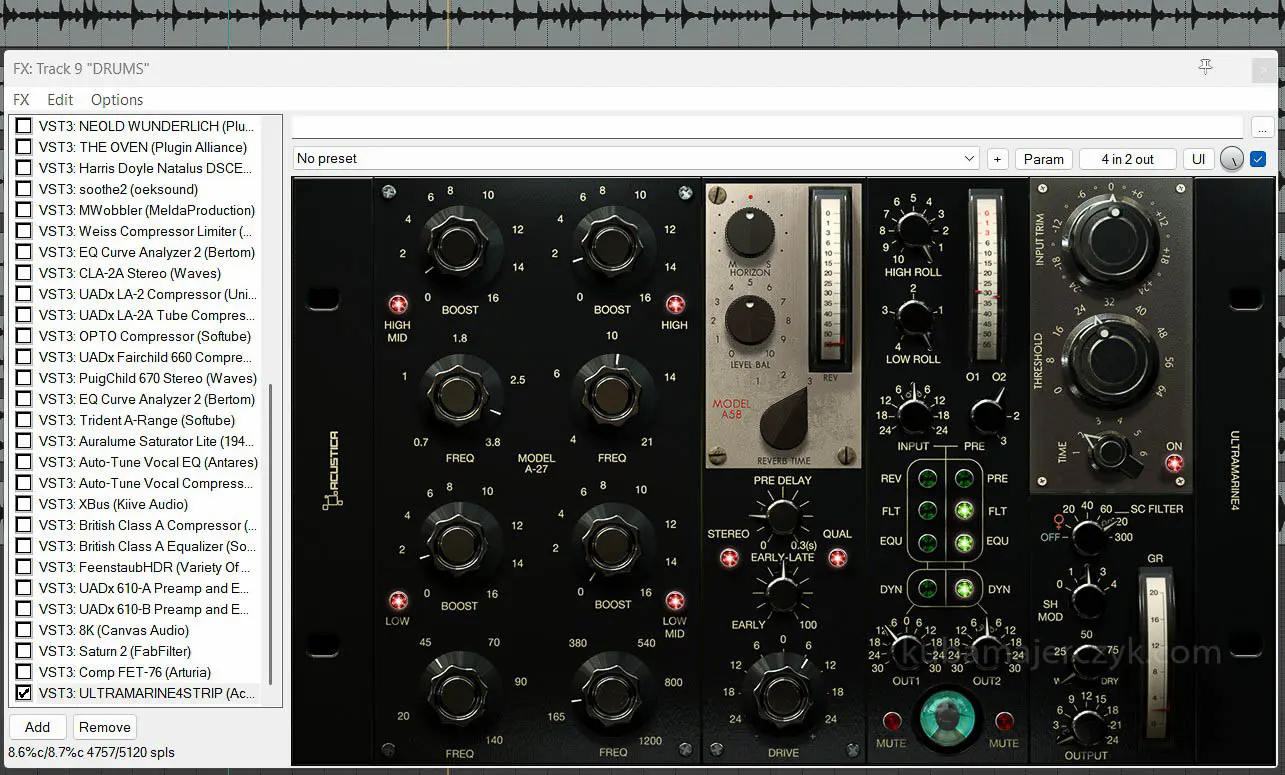
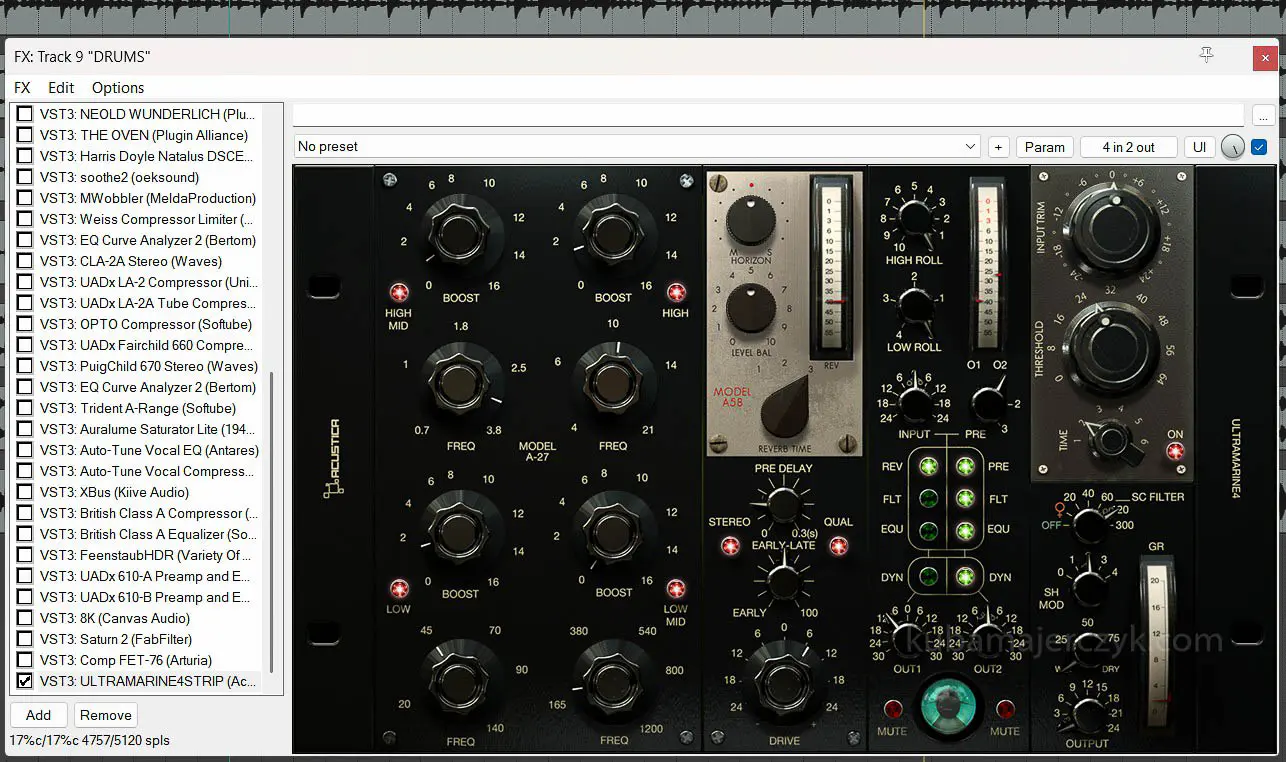
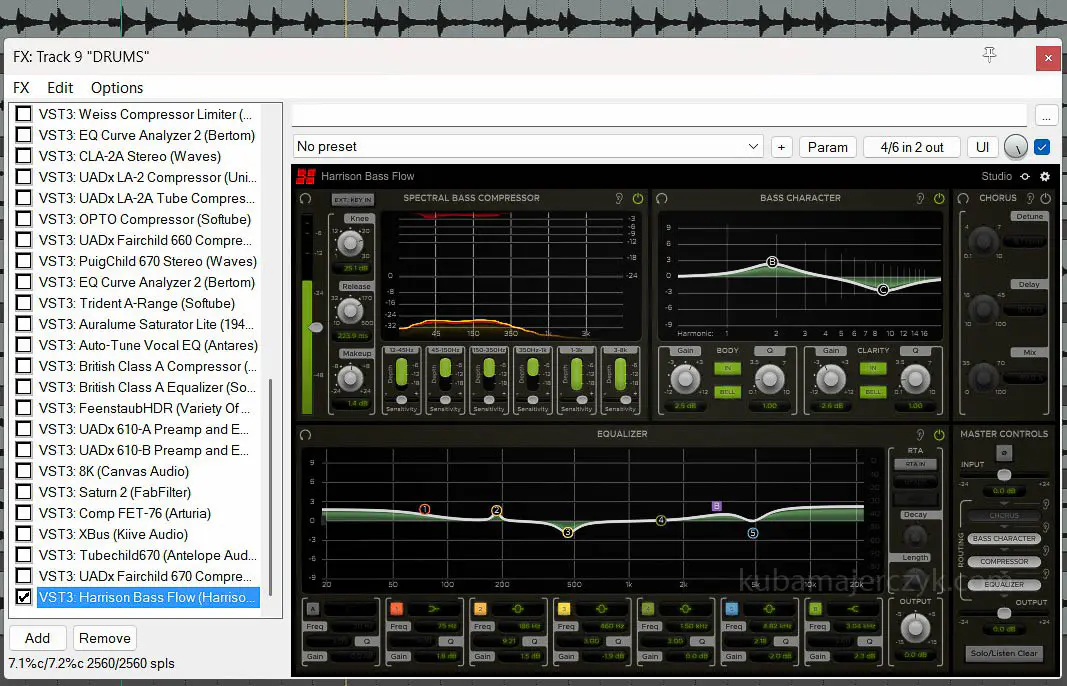
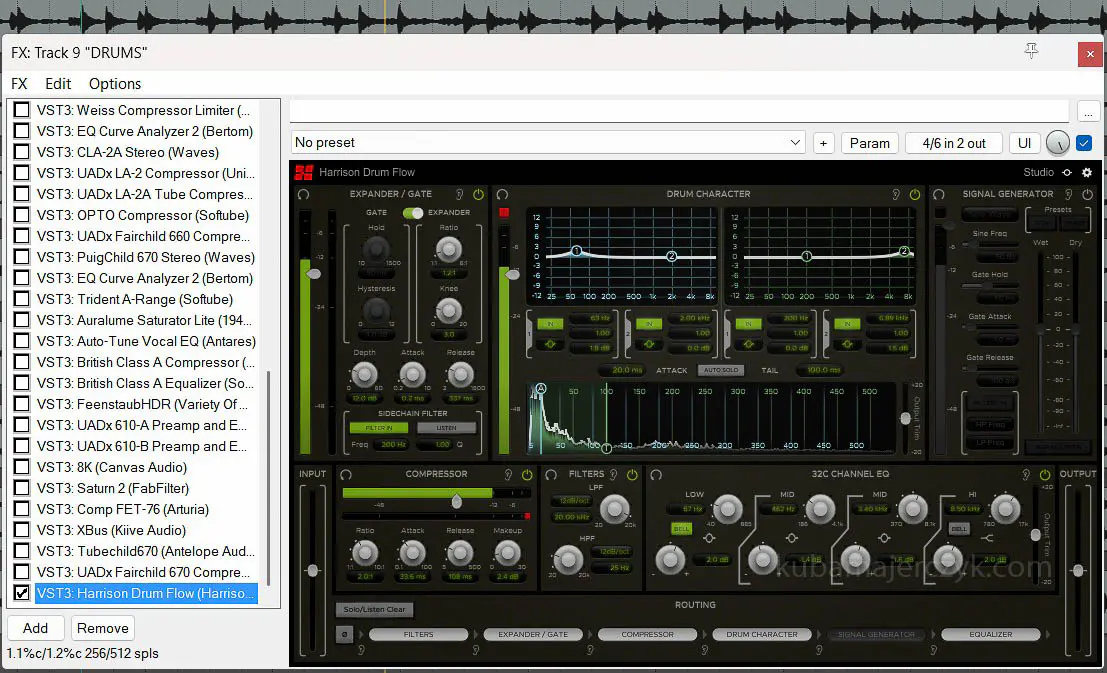
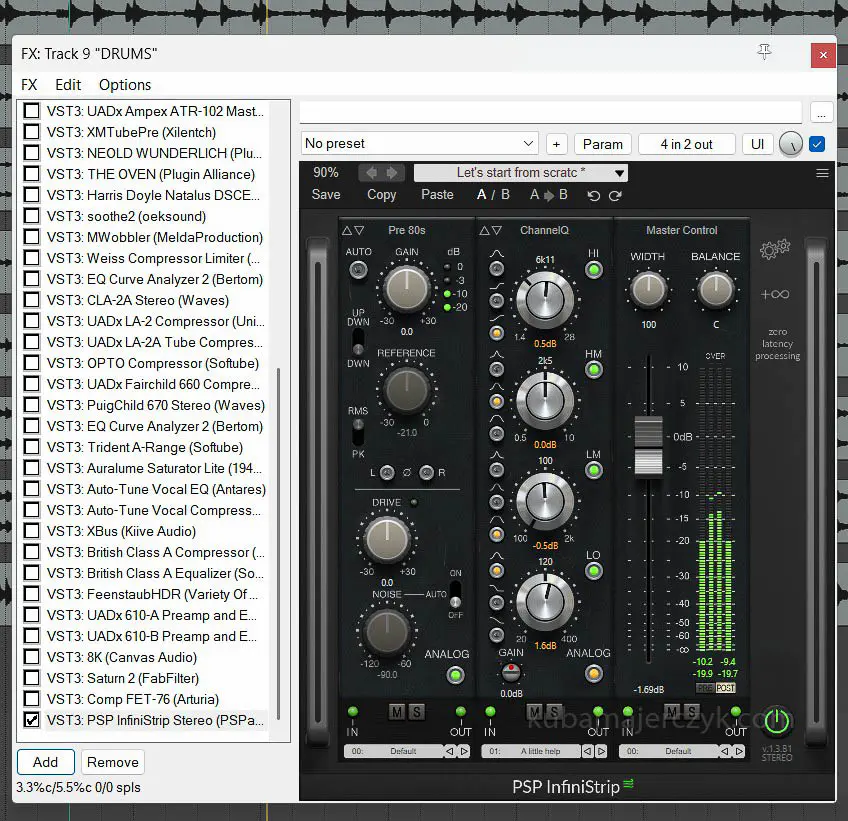
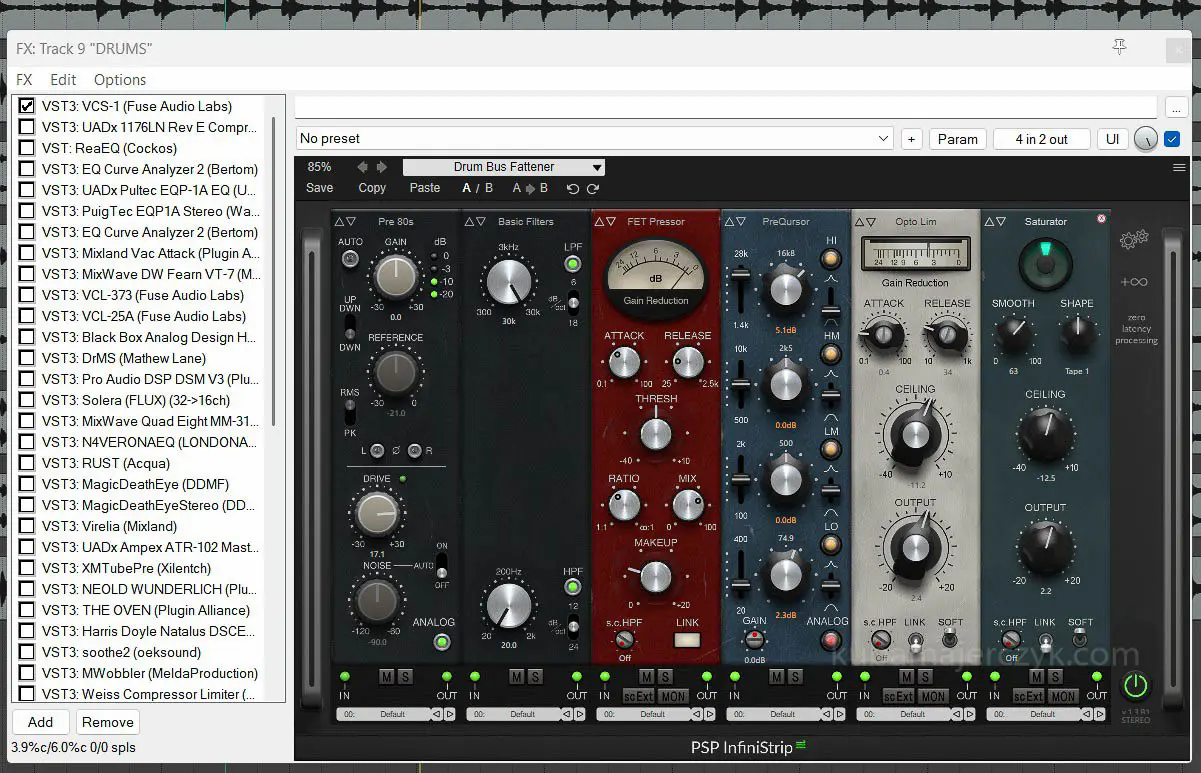
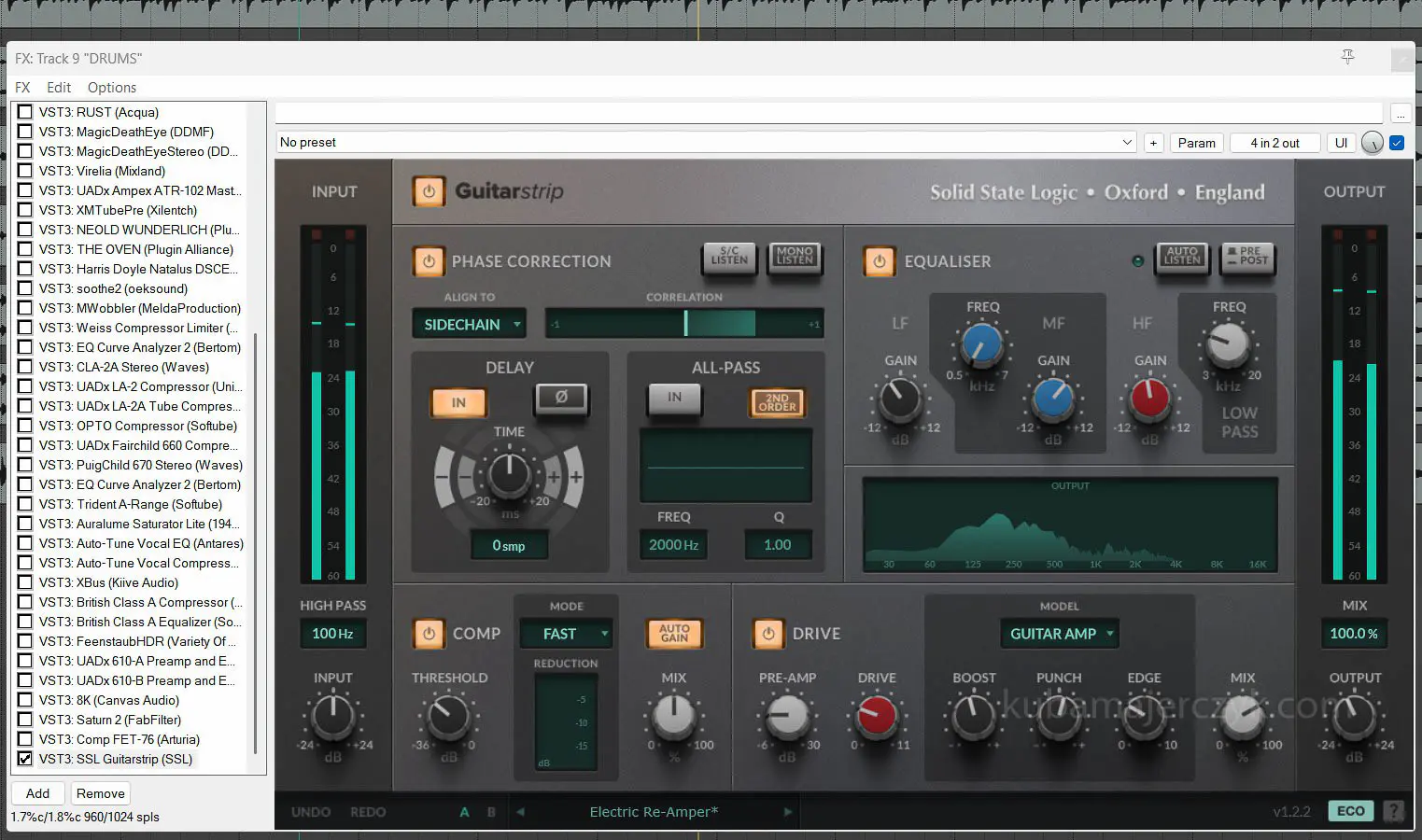
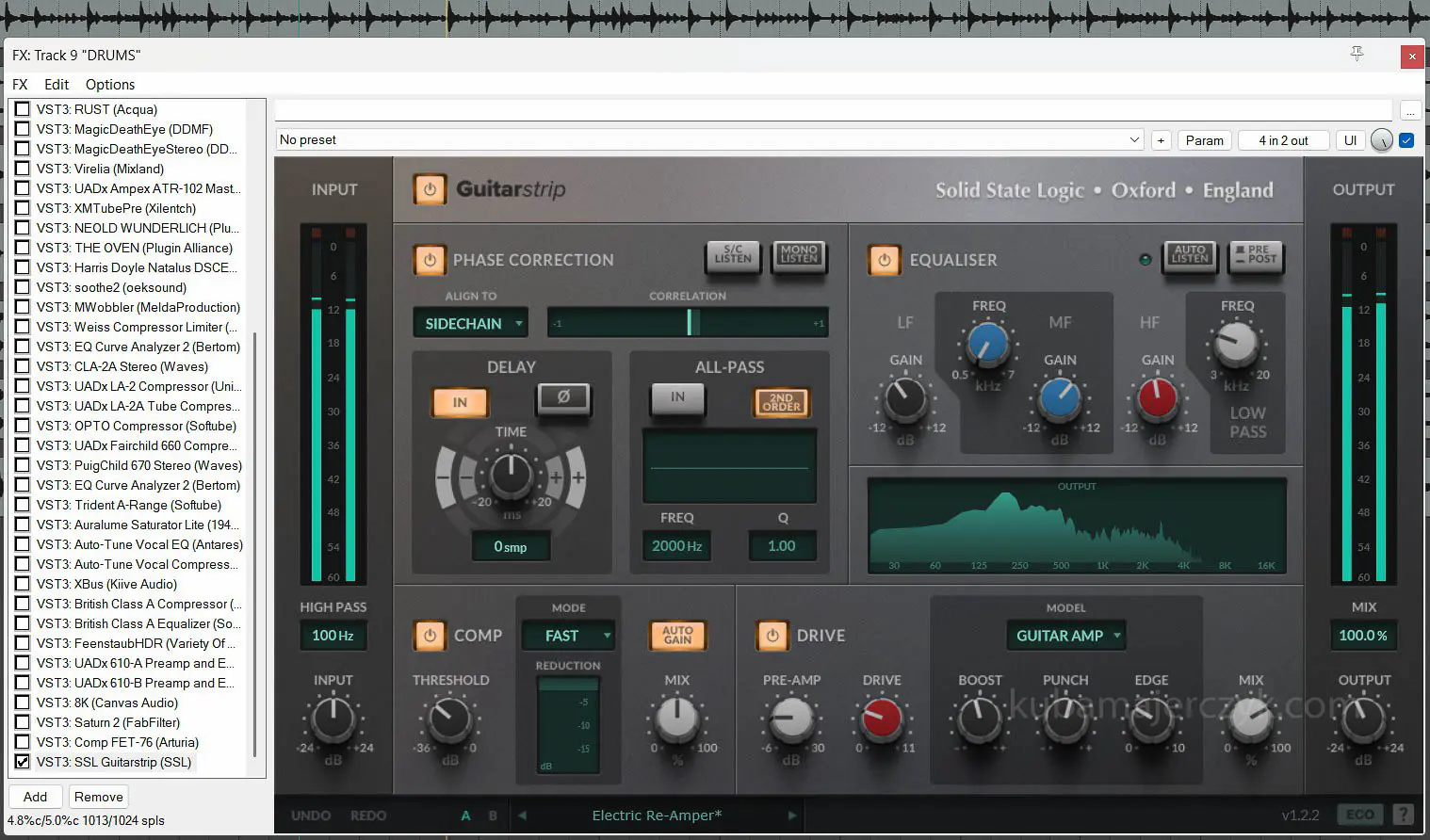
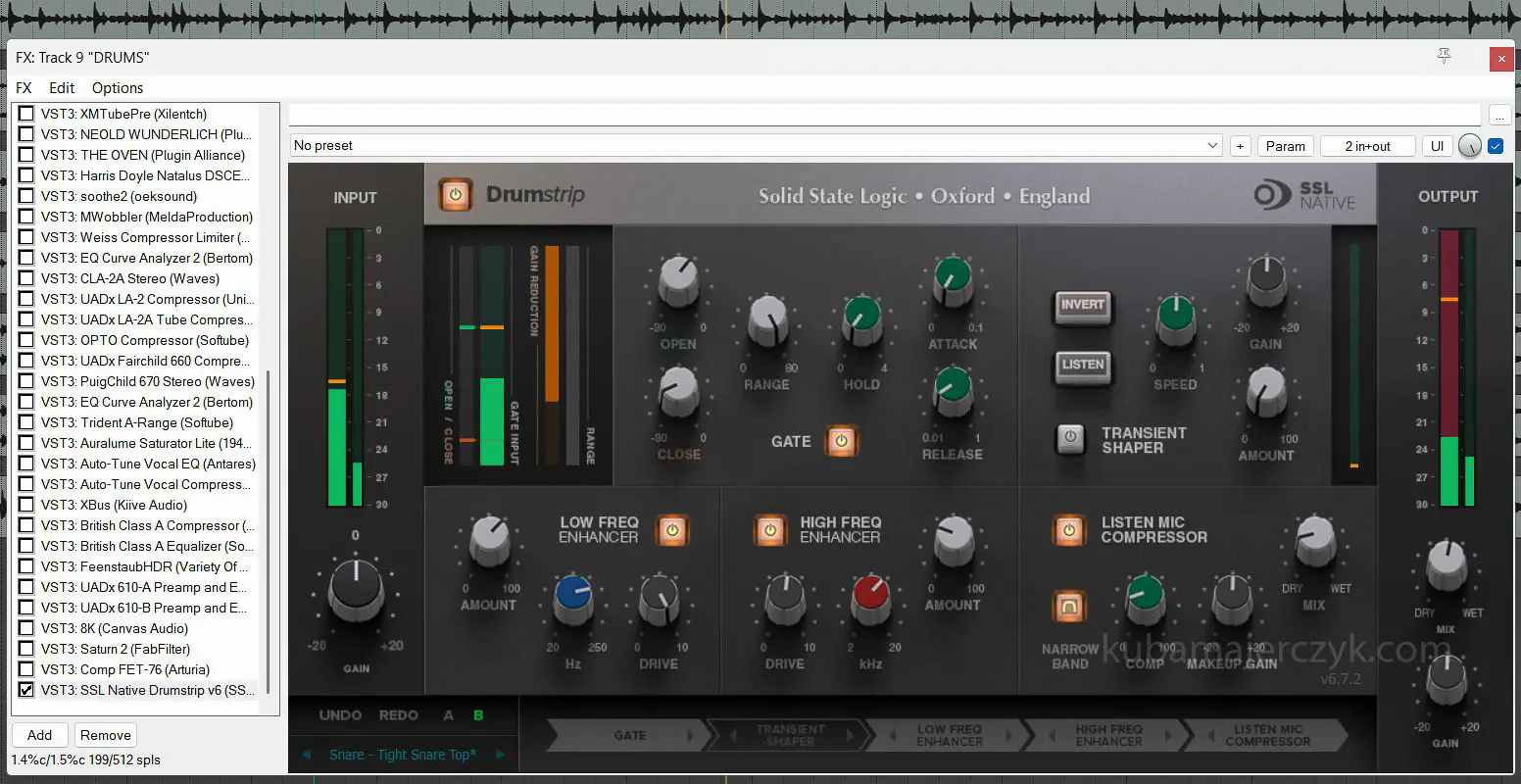
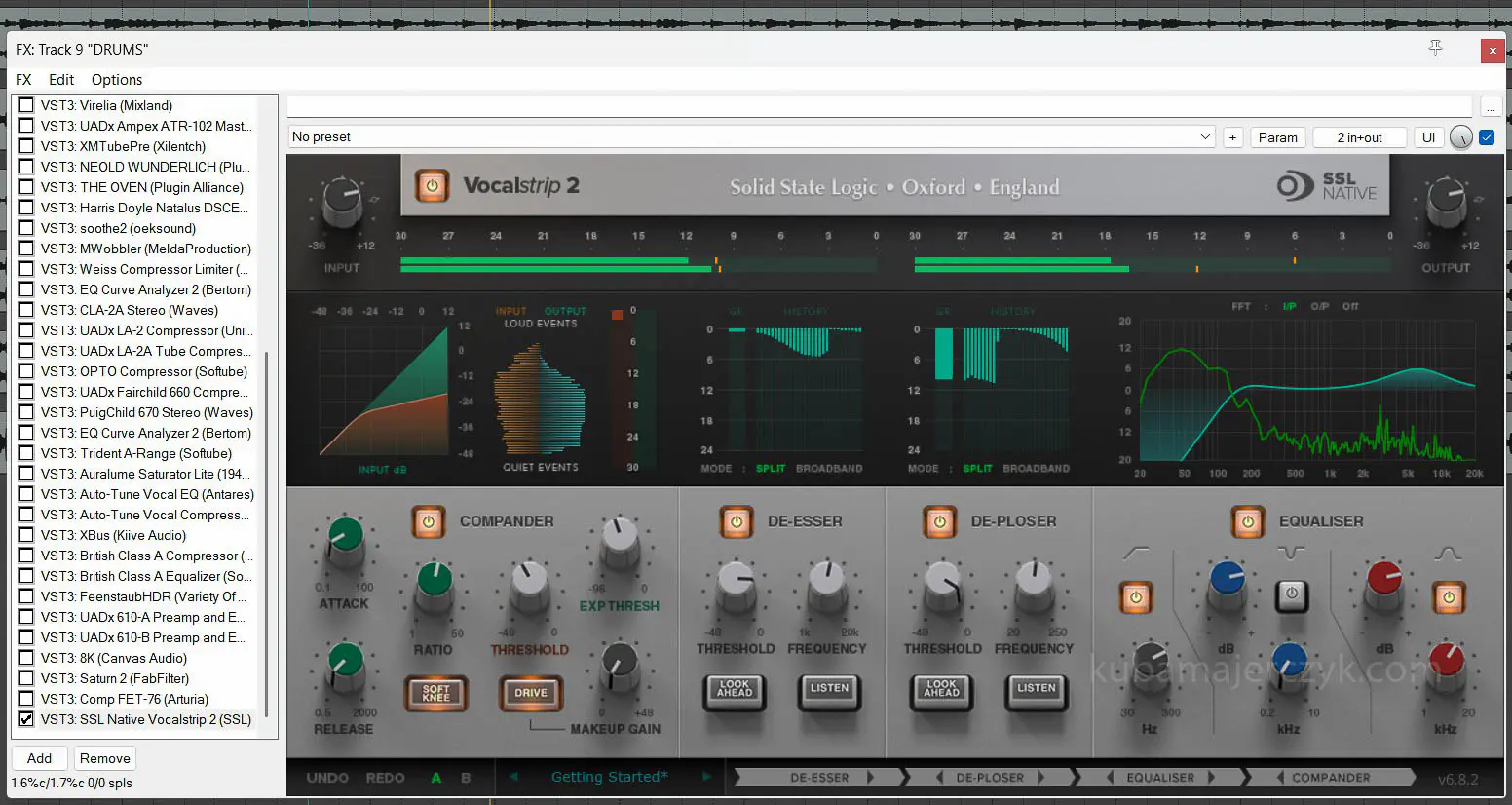
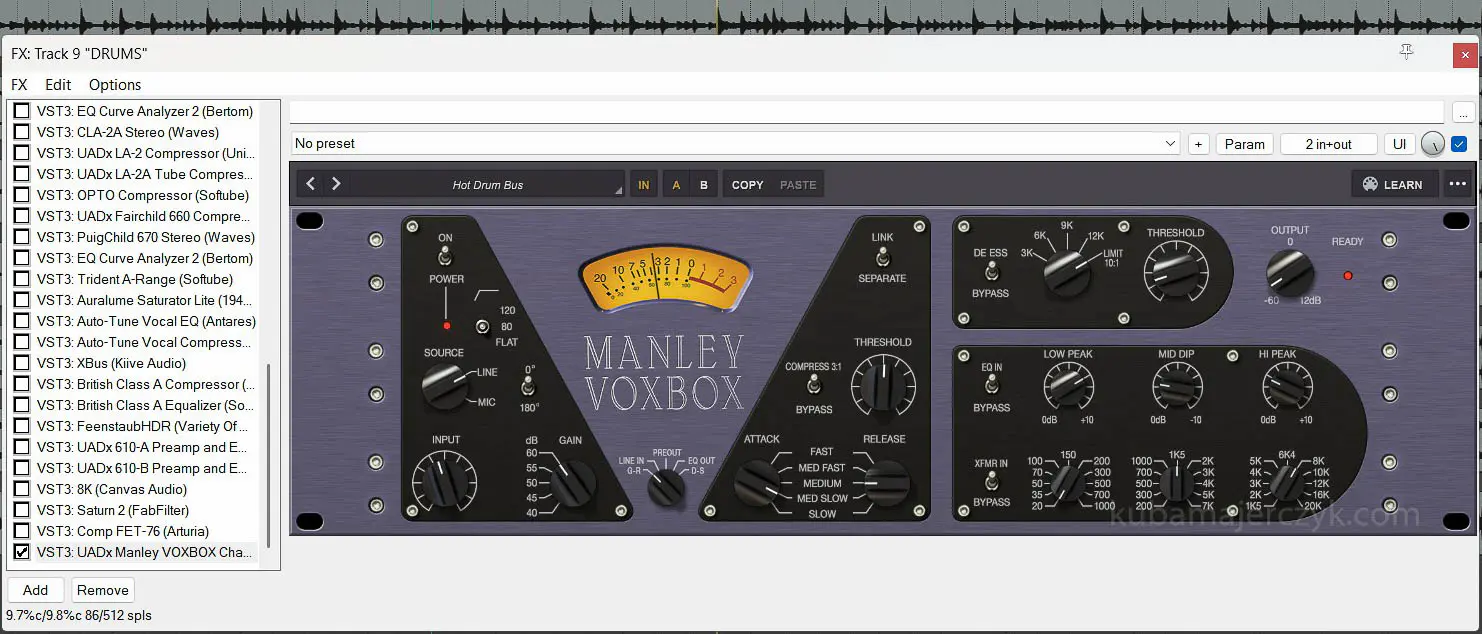
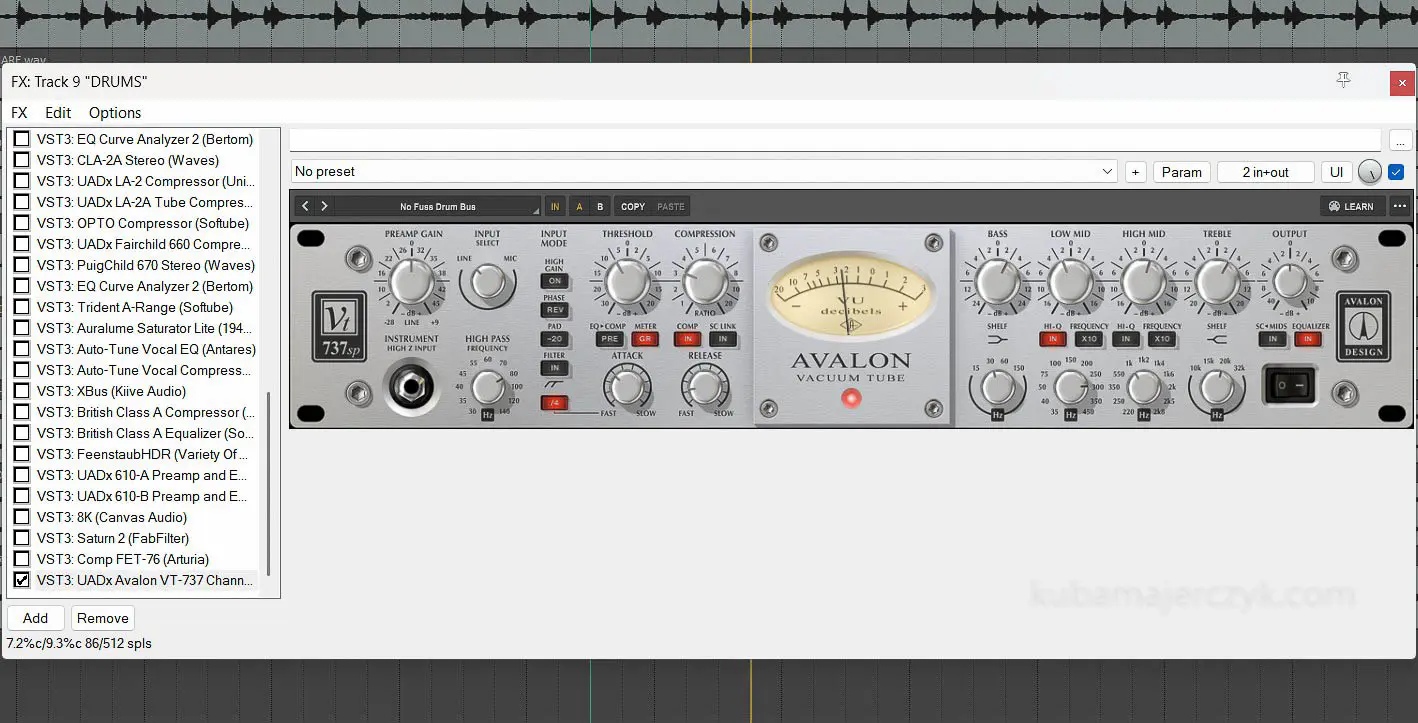
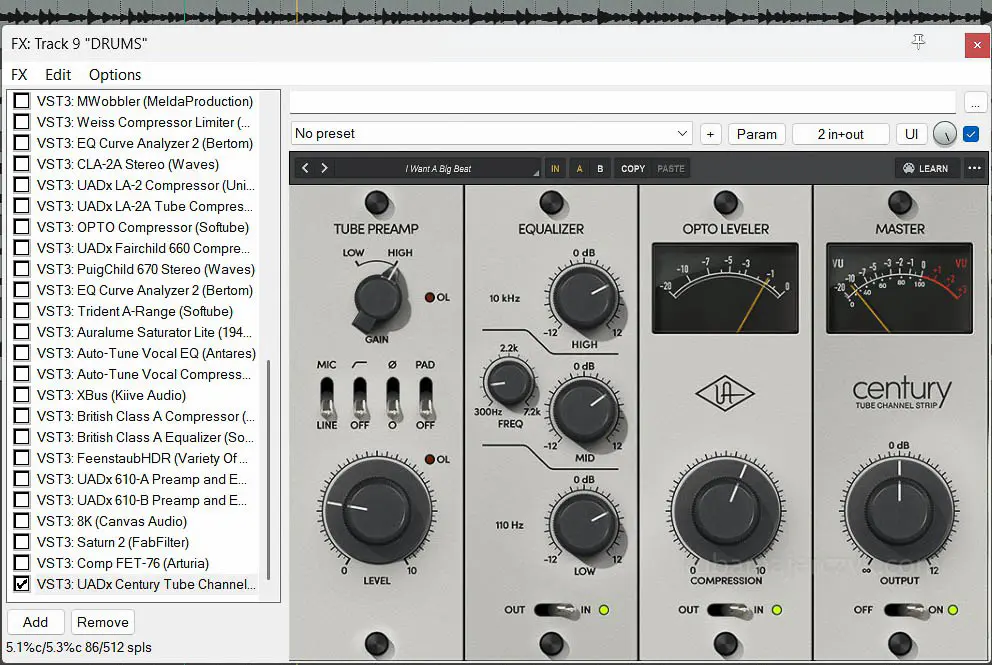
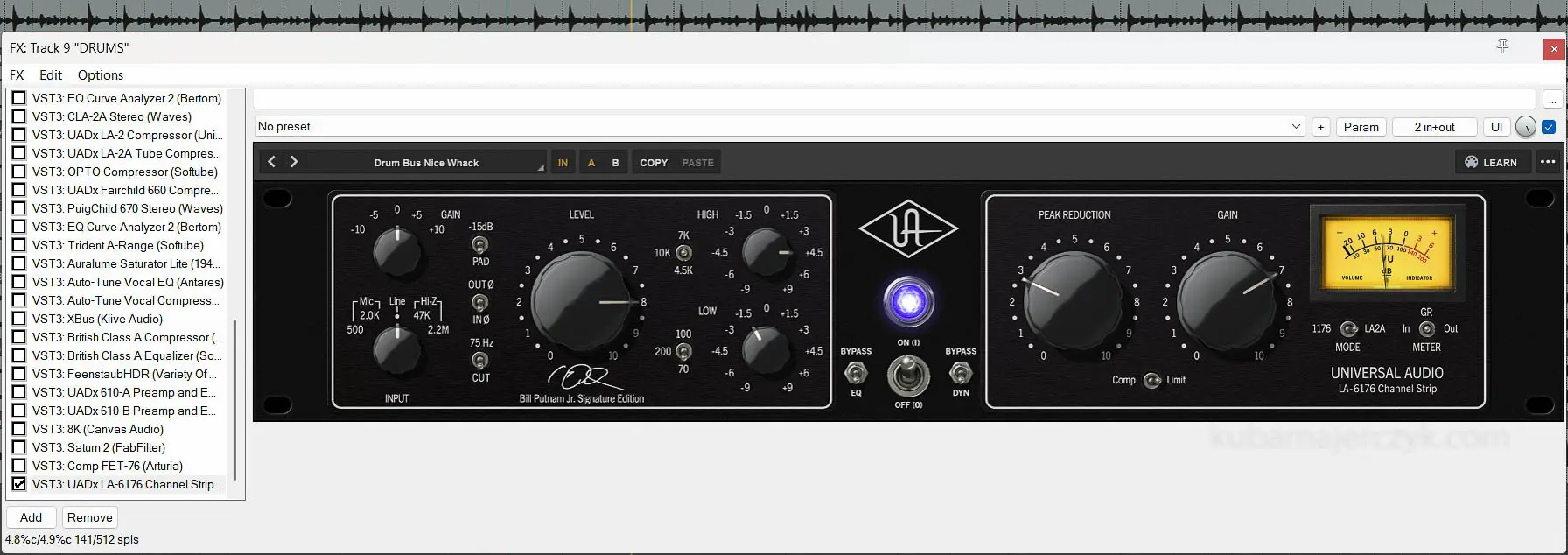
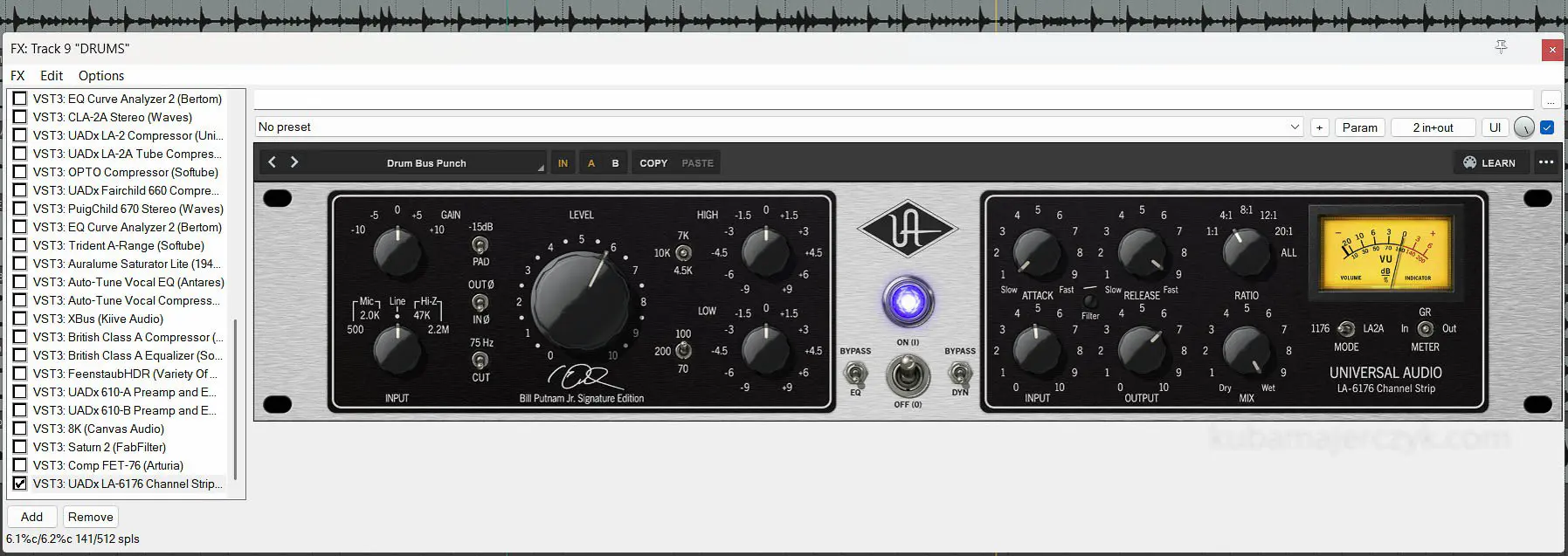
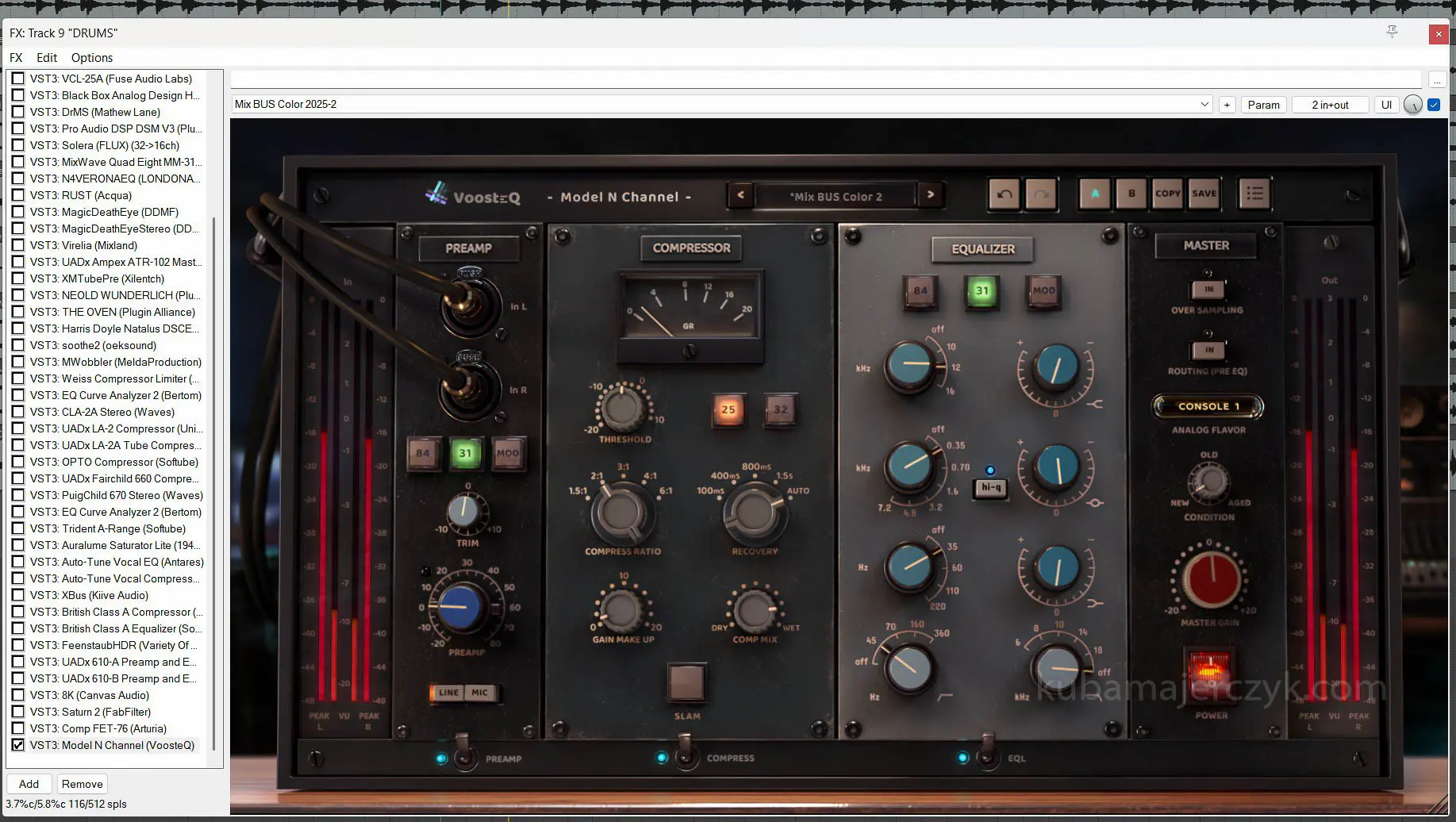
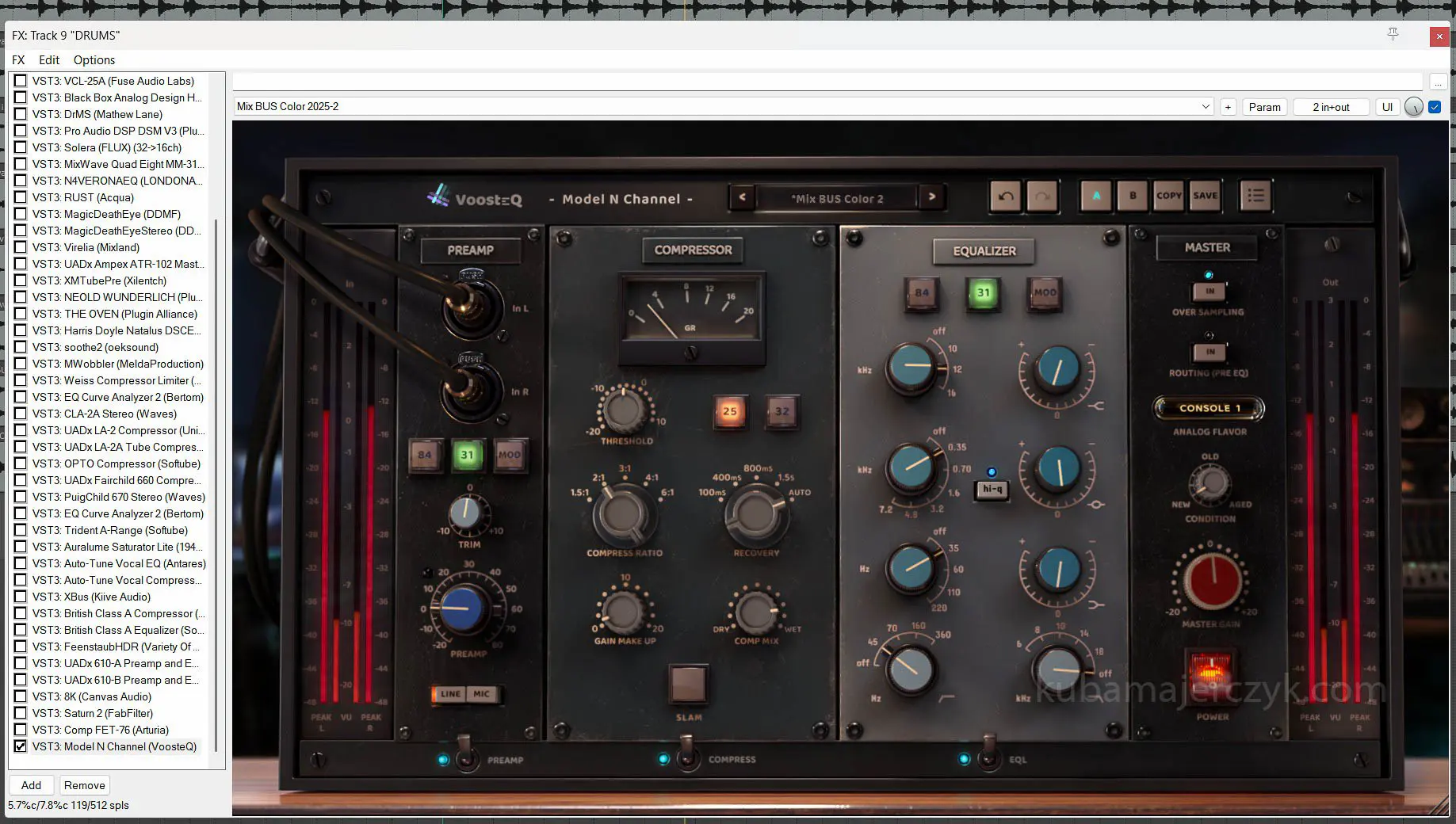
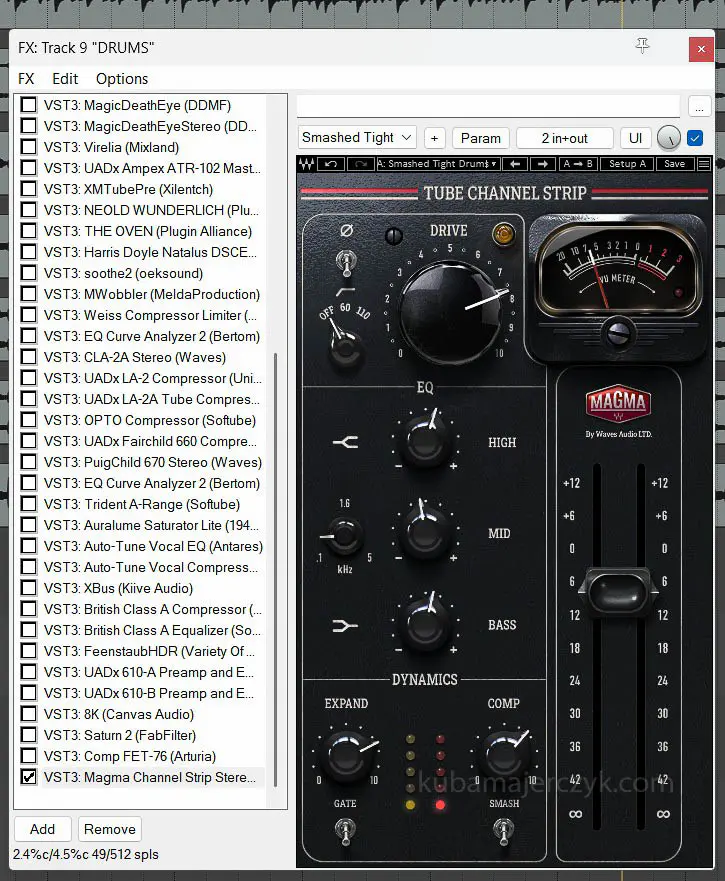
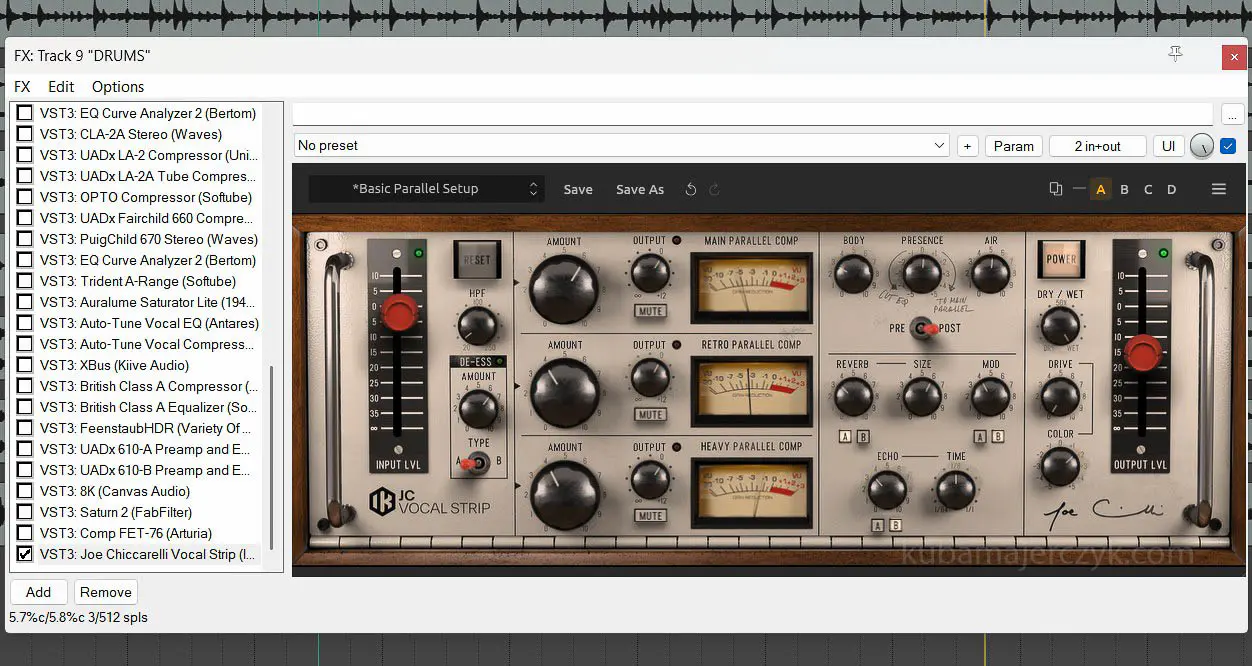
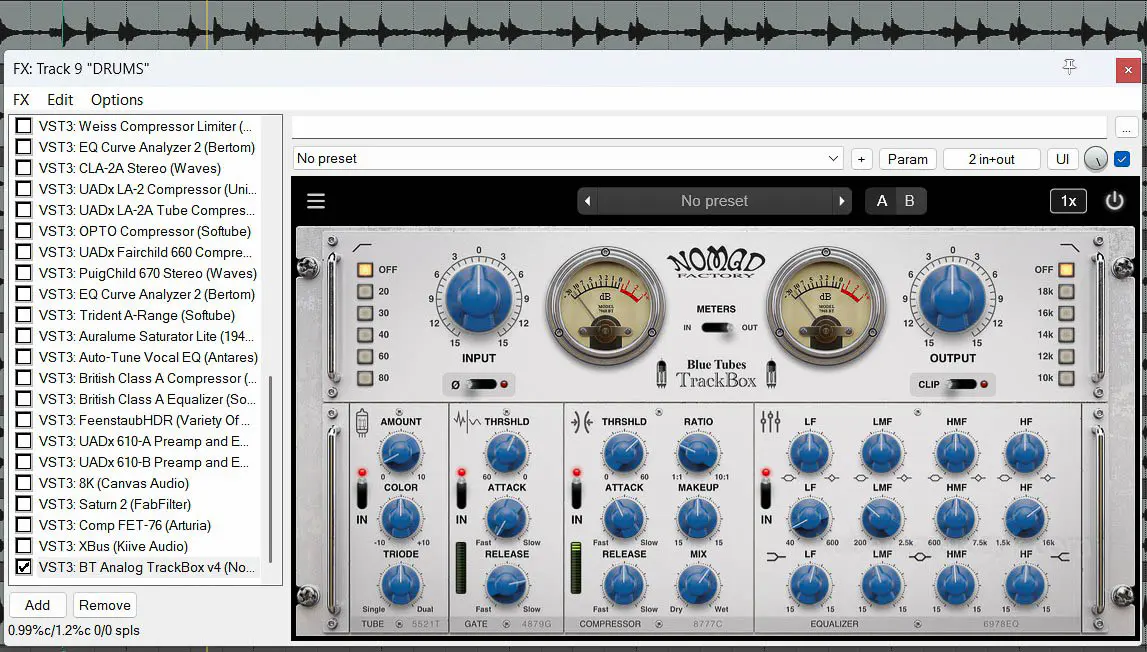
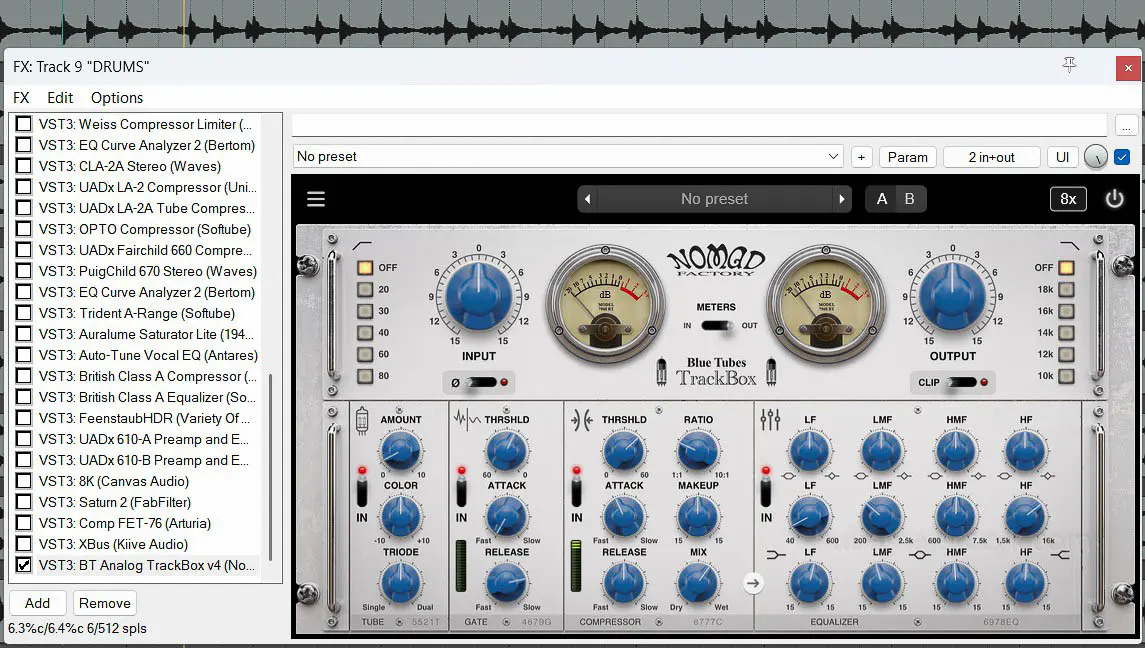
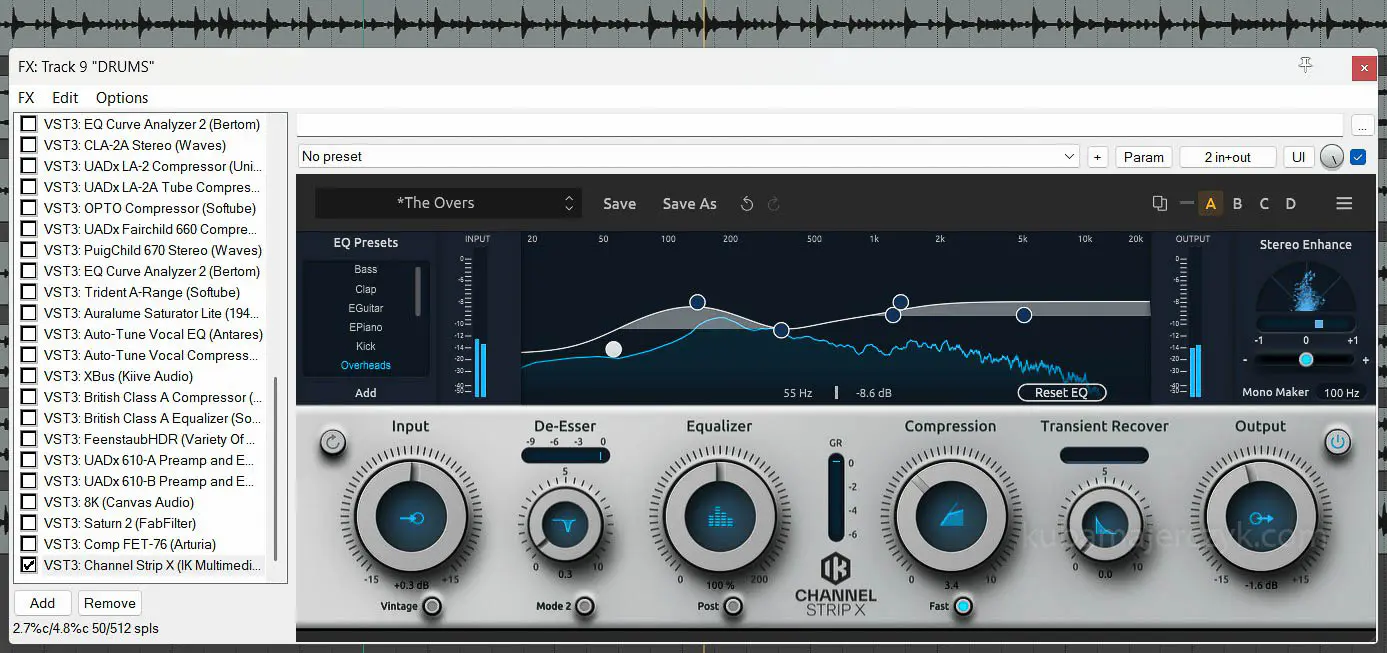
The CPU (AMD Ryzen 9 5900X) load values for individual channel-strip plug-ins are shown below.
The DAW (Reaper) session parameters are: 48 kHz, 24-bit, 512 samples ASIO® buffer.
Overview
As might be expected, some of the plugins that emulate console channels, due to their multi-module structure, can be quite demanding on CPU power.
The results of the CPU load readings should be considered only as a rough guide to help you plan your DAW session optimally.
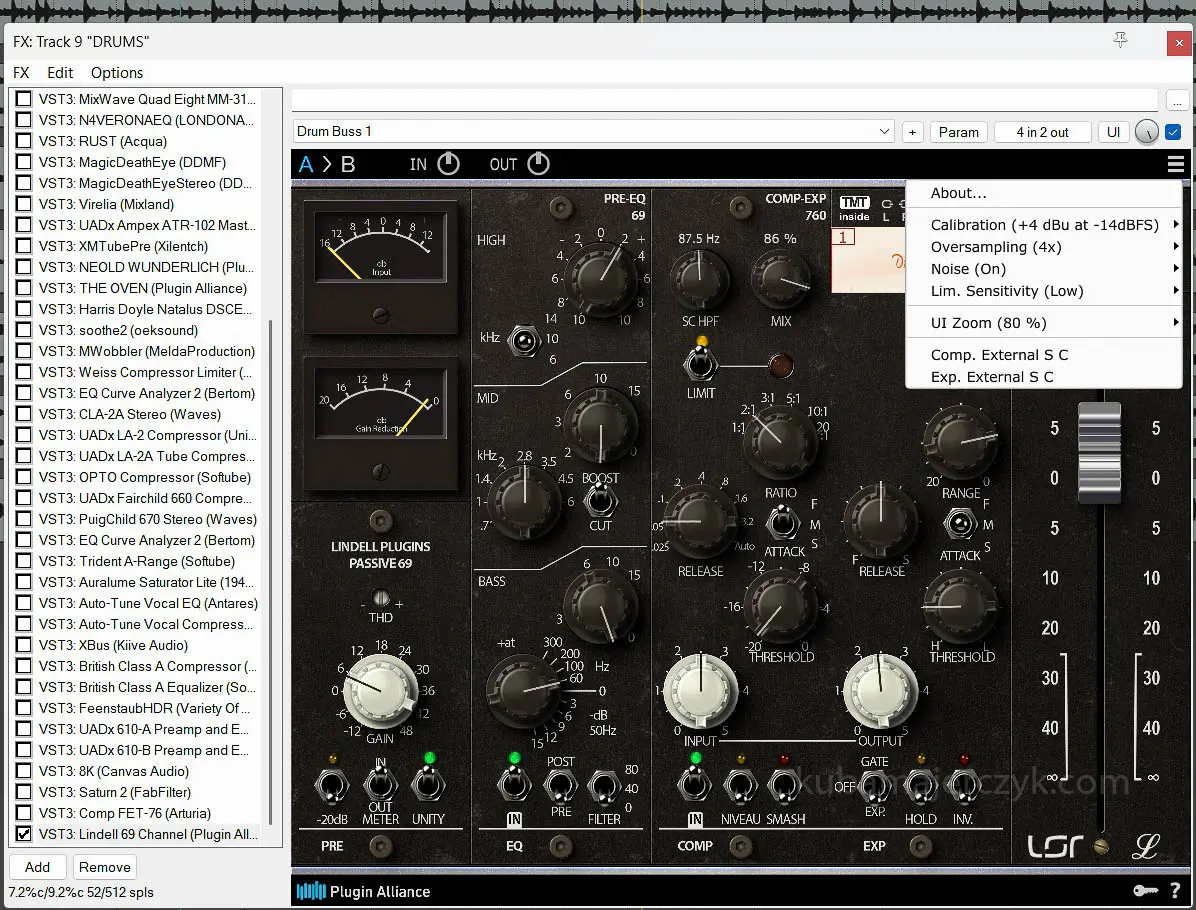
If the plug-in has an oversampling function, when using multiple instances in a session, it may be necessary to disable oversampling while making adjustments, then enable it again just before exporting the mix/sub-mixes (so-called stems) or before freezing theese audio tracks. Some plugins offer automatic oversampling during export, which obviously makes the work easier.
Personally, I use the feature of freezing audio tracks containing channel-strip plugins and, if necessary, additional saturation more or less at the moment when I start working with groups, effect and summing buses, because that’s when the (Cubase) demand for real-time computing power starts to increase and every spare CPU cycle comes in handy.
® ASIO is a trademark and software of Steinberg Media Technologies GmbH.